Back To Blog
Small Kitchen Appliances Wholesale: 2027 Buying Guide
Buying small kitchen appliances wholesale for 2027 means choosing products, suppliers, and order terms that fit your customers—not simply securing the lowest unit price.
This guide helps retailers, online sellers, and hospitality buyers compare assortments, calculate purchasing costs, and check supplier documentation. Use it as a planning framework, then reconfirm prices, import requirements, and product availability before committing to an order.
What should you check before buying small kitchen appliances wholesale?
Before buying wholesale small kitchen appliances, establish the intended use, required product specifications, total purchasing cost, supplier reliability, and after-sales responsibilities.
Put these requirements into a written buying brief so every quotation answers the same questions. A low-priced blender is not a useful comparison with another model unless capacity, accessories, packaging, and support expectations also match.
Start with five decisions:
Customer and setting: Identify whether you are serving households, gift shoppers, furnished rentals, or food-service operators.
Product requirements: Specify capacity, dimensions, electrical compatibility, included accessories, and cleaning expectations.
Order scope: Set a spending ceiling, preferred delivery window, and acceptable minimum order quantity.
Sales channel: List the packaging, product information, and documentation your store or marketplace requires.
Risk limits: Decide which missing documents, payment requests, or product defects will stop the purchase.
Keep this brief focused enough to send with an initial inquiry. You want comparable responses, not a collection of unrelated catalog offers.
Build an assortment around customer needs
Organize Kitchen Appliances by the job customers need them to perform. Consider breakfast preparation, beverage making, compact cooking, and everyday food preparation rather than collecting products because they look distinctive.
For each proposed item, write a purchase rationale. A compact chopper might suit customers with limited counter space; a larger food processor needs a different capacity and storage proposition. Ask what makes each model worth stocking alongside the products you already sell.
Separate powered appliances from manual accessories when reviewing kitchen gadgets wholesale catalogs. Assess discount kitchen tools for material quality, grip, storage, and compatibility with the appliances they accompany. Avoid adding an accessory bundle unless every component has a clear purpose.
Keep household and commercial buying briefs separate. If you are sourcing bulk kitchen equipment for a café or shared kitchen, ask the supplier to confirm the intended operating environment and warranty coverage in writing. Do not assume a household model is suitable simply because its capacity looks sufficient.
How do you evaluate small appliance suppliers?
Evaluate small appliance suppliers by their ability to verify product identity, answer technical questions, provide relevant documentation, and commit to clear commercial terms. Use catalog pricing only as an initial filter. Request a sample and a complete quotation before deciding whether a supplier belongs on your shortlist.
Send each candidate the same information request:
|
Ask for |
What to establish |
|---|---|
|
Legal business name and address |
Who will contract with you and receive payment |
|
Exact model numbers and specifications |
Whether the quotation matches the product you intend to buy |
|
Minimum quantities and carton packs |
Whether the order fits your budget and assortment |
|
Sample and production timelines |
When evaluation and delivery could realistically happen |
|
Relevant test reports and certification details |
What evidence supports safety or compliance claims |
|
Defect, return, and warranty procedures |
Who handles problems and pays associated costs |
Ask whether the business is the manufacturer, a distributor, or a trading company. Rather than treating one business type as automatically preferable, identify who controls production, documentation, and replacements.
Watch for inconsistent model numbers or paperwork that describes a different product. CPSC does not provide pre-market product approvals, so a claim of “CPSC approved” should prompt further questions rather than reassurance.
Compare total cost instead of headline discounts
Build your comparison around the cost of receiving saleable inventory. Request itemized figures for the goods, packaging, freight, insurance, inspection, and any services included in the offer. Record exclusions beside the price so they remain visible during negotiations.
For imported orders, confirm applicable duties and fees rather than treating the supplier’s shipping quote as the complete import cost. CBP notes that imported goods can incur user fees in addition to duties, with charges depending on the entry and transportation method.
Use this planning calculation:
Estimated landed cost per saleable unit = total acquisition and inbound costs ÷ expected saleable units.
Keep marketplace commissions, outbound fulfillment, advertising, and customer returns in a separate profitability calculation. This distinction helps you see whether a product is expensive to acquire, expensive to sell, or both.
For wholesale kitchen gadgets, request quotations at several quantities without assuming the largest order is best. Compare the discount with the extra cash commitment and storage requirement. Model a slower-selling scenario before accepting a higher minimum order.
Finally, document the delivery terms and identify who handles customs entry. Importers remain responsible for meeting applicable import requirements; outsourcing paperwork does not make supplier assurances sufficient.
Check safety, traceability, and product claims
Treat compliance review as a purchase condition, not a task to finish after delivery. Identify the rules and sales-channel requirements relevant to the exact appliance and destination market. Ask a qualified compliance specialist to resolve uncertainty before placing a production order.
For U.S. resale, check the exact model against CPSC recalls before purchase and again before listing. Selling recalled products is unlawful; CPSC provides specific guidance on products that have received the prescribed recall remedy. Do not assume an unopened carton makes recalled stock acceptable.
Build a product file containing:
Model identification: Product photographs, rating-label images, model numbers, and batch or serial information where available.
Supporting documents: Relevant reports, certification references, and the manufacturer details associated with them.
Customer information: Instructions, warnings, cleaning guidance, and the warranty statement you intend to provide.
Traceability records: Supplier invoices, shipment details, and records connecting received stock to its source.
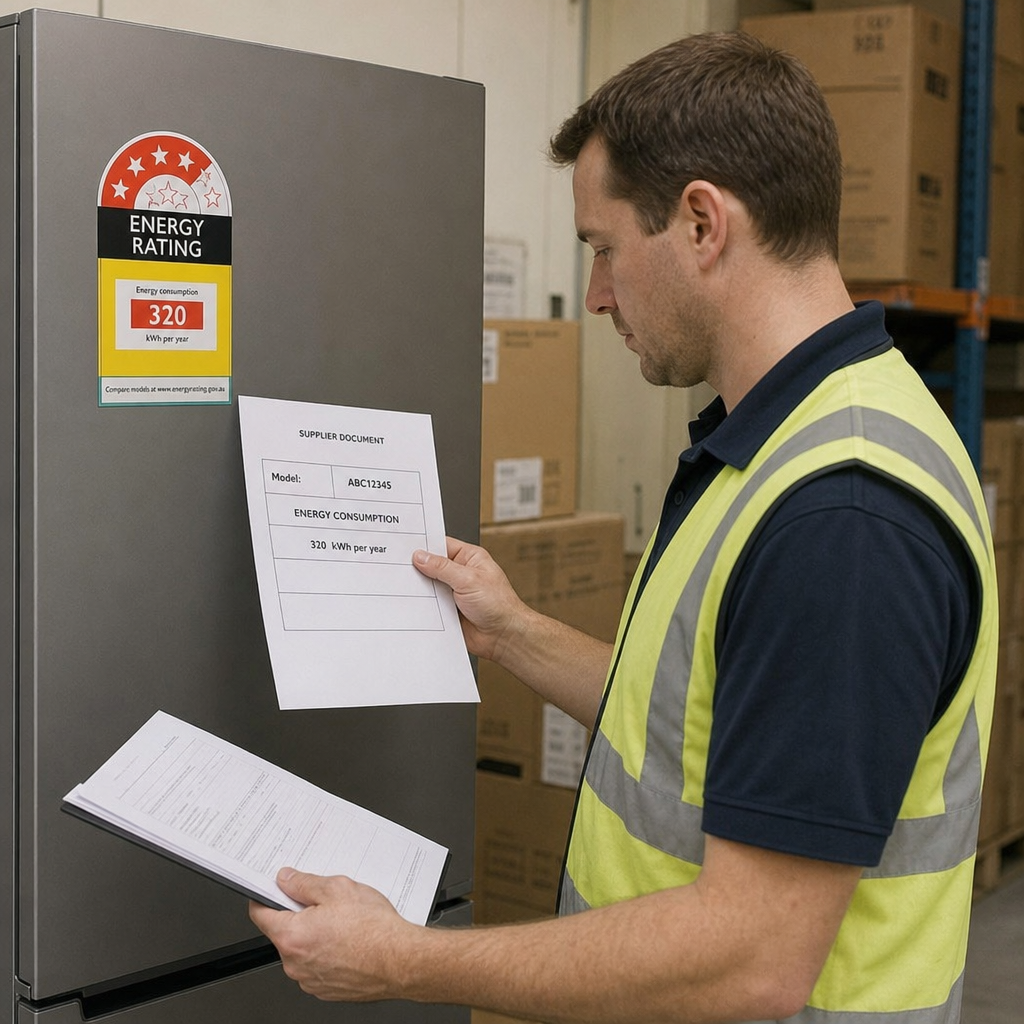
Verify that documents describe the actual product, not a visually similar appliance. Where a certification is claimed, check it with the issuing organization rather than relying on a logo in a catalog. Keep marketing claims within what the documentation supports.
Use samples and a pilot order to test the purchase
Evaluate samples against a written checklist. Follow the manufacturer’s instructions and avoid improvised electrical or safety testing; use qualified professionals for assessments beyond ordinary product evaluation. Record observations so the purchasing decision does not depend on memory.
Check assembly, control clarity, accessory fit, cleaning access, packaging protection, and the completeness of instructions. Measure dimensions if storage or shelf space matters. Photograph the approved sample and record its model identification as a reference for later deliveries.
Then structure a pilot order around learning:
Define acceptance criteria: Specify packaging condition, included parts, labeling, and acceptable workmanship before shipment.
Inspect received stock: Compare a planned selection of units with the approved specification and sample.
Track customer issues: Separate delivery damage, missing accessories, usability complaints, and functional failures.
Review before reordering: Resolve recurring problems and document any supplier changes.
Choose a pilot quantity your business can evaluate and support. Avoid calling a product validated after checking only its appearance.
Negotiate support as carefully as price
Before paying a deposit, agree on the process for shortages, damaged cartons, defective units, and late delivery. Specify evidence requirements, reporting deadlines, and whether remedies involve replacements, refunds, or credits. Clarify who pays return freight and whether replacement stock ships separately or with a future order.
Keep supplier remedies distinct from promises made to your customers. The FTC explains that consumer warranties can involve both express promises and implied obligations, and written warranty terms must be available to consumers before purchase where required. Have your customer-facing policy reviewed for the markets you serve.
For 2027 planning, request quotation expiration dates and reconfirm terms before each purchase. Treat any future availability or lead-time statement as something to verify, not a guarantee. Preserve agreed specifications and changes in writing.
Make the first order earn the reorder
A wholesale purchase should give you more than inventory: it should produce a repeatable specification, a documented supplier relationship, and a clear view of profitability. Start with customer needs, compare complete costs, and resolve documentation gaps before committing funds. Expand only when the delivered products and supplier support justify the next order.
Frequently Asked QuestionsAbout Buying Small Kitchen Appliances Wholesale
What factors should I consider when choosing suppliers for small kitchen appliances?
When selecting suppliers, consider their reliability, ability to provide documentation, response to technical questions, and clear commercial terms. Evaluate their product certifications and previous customer reviews to ensure quality and safety.
How can I ensure I am getting the best price when buying wholesale kitchen appliances?
Compare total costs rather than just headline discounts. Request itemized quotes that include all costs like freight, packaging, and insurance. Assess the value you are receiving based on the total landed cost per saleable unit.
What are the key compliance checks I need to perform before buying appliances wholesale?
Verify the product against safety standards set by organizations like the CPSC. Review all necessary documentation such as certifications, test reports, and compliance details related to your market's requirements.
How can I evaluate product quality before placing a bulk order?
Request samples and pilot orders to assess product quality. Use a written checklist for evaluation criteria such as functionality, assembly, and packaging. Inspect the samples to ensure they meet your specifications before finalizing a larger order.
What should I include in my purchasing brief when contacting suppliers?
Your purchasing brief should include details on customer demographics, product specifications, order scope, sales channel requirements, and risk limits. This helps suppliers provide comparable quotes and ensures clarity in your requirements.