Back To Blog
How to Buy Smart Home Devices Wholesale from China
Buying smart home devices wholesale from China starts with a clear product specification, followed by supplier checks, sample testing, and a documented purchase agreement.
Compare the complete cost of getting sellable products into your warehouse—not just the factory price.
This article explains how to choose sourcing channels, evaluate smart home products, negotiate quantities, and plan a controlled first order.
How do you start buying smart home devices wholesale from China?
Start by defining the product, destination market, required compatibility, and initial order quantity before contacting suppliers. Give every candidate the same requirements so their quotations are comparable.
Request samples and supporting documentation before committing to production; Alibaba’s buyer guidance recommends samples, detailed purchase orders, and inspection services as purchasing safeguards.
Build a purchasing brief that includes:
Product and application: Describe the installation and customer need, such as indoor lighting control or door monitoring.
Electrical specifications: State the required voltage, plug format, rated load, and installation conditions.
Connectivity and controls: Specify the intended ecosystem, app, hub requirements, and essential functions.
Order scope: Separate your trial quantity from possible repeat orders, and identify packaging or branding requirements.
Support expectations: Ask for warranty procedures, update commitments, and replacement arrangements.
Keep the first assortment focused. Rather than requesting an entire connected-home catalog, choose a few products you can test thoroughly and explain clearly to customers.
Where are the best places to buy smart home devices in bulk wholesale?
The best sourcing channel depends on whether you need online purchasing tools, direct product demonstrations, or supplier introductions. Consider Alibaba for platform-based ordering and the Canton Fair for discovering relevant exhibitors. Neither route replaces product testing or supplier verification.
Alibaba: Use it to gather comparable quotations and arrange samples. Where available, Trade Assurance provides payment and dispute-related protections subject to its terms. Record specifications and delivery commitments in the platform order, and follow its payment requirements rather than assuming an informal agreement is covered.
Canton Fair: Its official product collections include connected products such as smart panels and locks. Use exhibitor information to prepare a shortlist, then ask technical questions and arrange follow-up testing instead of treating a demonstration as final approval.
Global Sources events: Its published show materials include smart lighting, automation, security, and sensors. Check the relevant event’s current exhibitor information before making travel plans. (s.globalsources.com)
Ask each contact which legal entity will accept your order and which facility will manufacture it. Keep that distinction visible throughout your evaluation.
Verify the supplier behind the quotation
Make supplier verification a separate task from product selection. Request the business’s registered name, manufacturing address, relevant production capabilities, and the identity of any subcontractor handling assembly or testing. Ask for a live walkthrough or an independent assessment when the order warrants it.
Your goal is to establish who is accountable for production, inspection, and corrective action. Alibaba’s sourcing guidance identifies production monitoring and local inspection services as additional purchasing safeguards. (activity.alibaba.com)
Use one comparison sheet for every candidate. Record sample results, document availability, minimum order quantity, production schedule, customization scope, and unresolved questions. Treat a missing answer as an open risk—not as an implied promise—and resolve important gaps before paying a production deposit.
Test compatibility, setup, and ongoing support
Do not accept a broad compatibility claim without checking the exact product. For Matter or Zigbee certification claims, search the Connectivity Standards Alliance’s certified-product directory and compare the listed manufacturer and model with the proposed device.
The directory distinguishes certified end products from compliant platforms, an important distinction when reviewing supplier evidence.
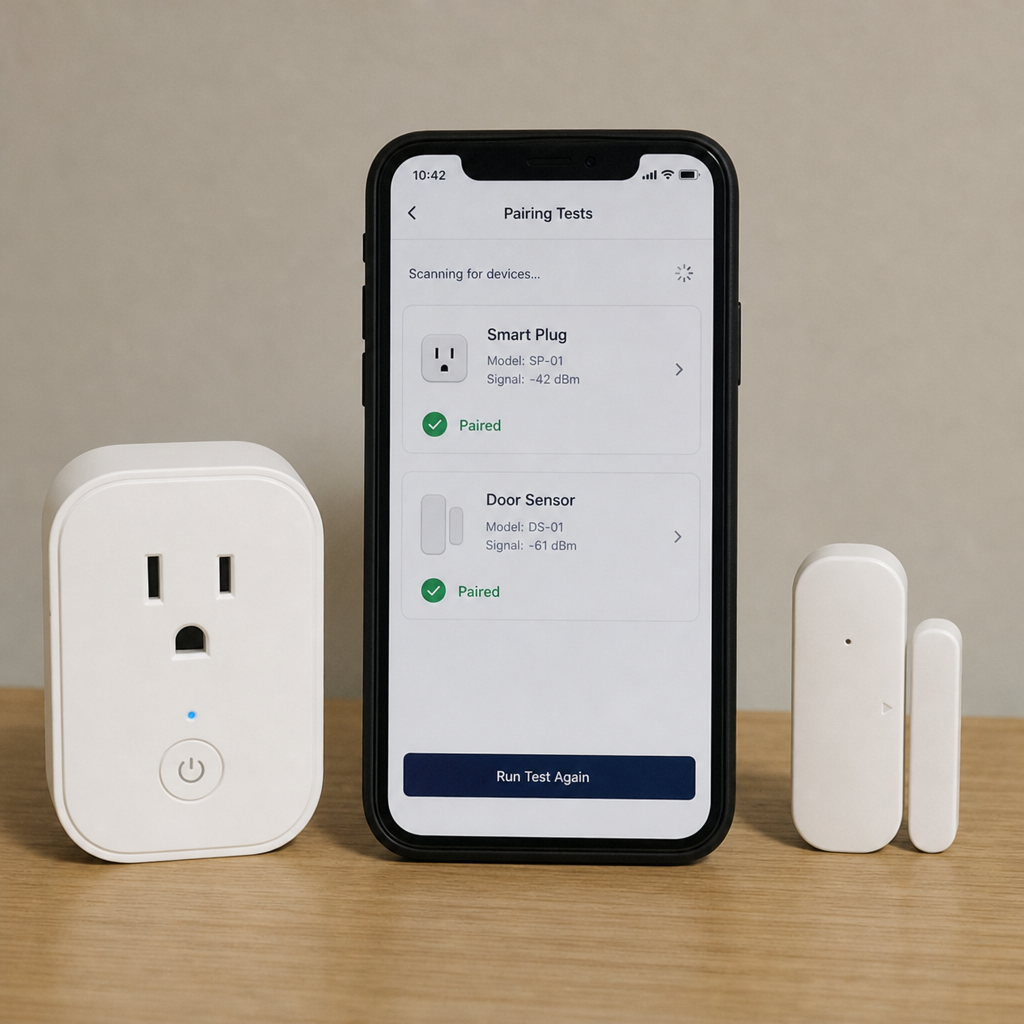
Run samples through a repeatable acceptance checklist:
Pairing: Set up each device using the intended app, hub, and customer instructions.
Recovery: Test behavior after a power interruption, router restart, and factory reset.
Functions: Check every feature you intend to advertise, including schedules and automations.
Usability: Review instructions, app language, account creation, and error messages.
Support: Request the update process, support period, and procedure for reporting vulnerabilities.
NIST’s consumer IoT guidance covers cybersecurity capabilities across the product, including software updates and supporting documentation. Use those topics to frame supplier questions rather than evaluating only the hardware. Ask what happens if the app or cloud service is discontinued.
Check destination-market requirements before production
For U.S. sales, confirm the applicable equipment authorization requirements for radio-frequency devices before importing commercial inventory. FCC rules address authorization, marketing, and importation; a supplier’s general assurance is not a substitute for reviewing the relevant evidence for your product. Have a qualified compliance specialist assess the proposed configuration and documentation.
Treat radio compliance, electrical safety, ecosystem certification, and import requirements as separate review items. Ask your specialist which tests, labels, instructions, and records apply to the product and sales channel. CBP emphasizes that importers must ensure merchandise meets other agencies’ applicable requirements.
Before approving production, create a document checklist with your broker and compliance adviser. Include model identifiers, required reports, labeling artwork, commercial invoice details, and origin information. Resolve discrepancies while changes are still possible rather than after finished goods are awaiting shipment.
Compare bulk discounts against landed cost
When negotiating bulk discounts on smart home devices wholesale, request price tiers for realistic purchase quantities. Ask suppliers to separate the device price from packaging, customization, testing, and freight. This makes it easier to identify whether a lower quotation reflects a genuine concession or a different scope.
Use this budgeting framework:
Estimated landed cost per sellable unit = total purchasing, preparation, transport, import, and receiving costs ÷ expected sellable units.
Include samples, inspections, tooling where applicable, freight, insurance, duties, brokerage, and a planning allowance for defects or replacements. Ask your customs broker to verify classification and applicable duties using the actual product details. CBP notes that import requirements and duty treatment depend on classification and other criteria. (
Then compare the discount with the extra inventory commitment. Request alternatives such as standard packaging, fewer color variants, or repeat-order pricing. Do not buy more simply to achieve a cheaper unit price; choose a quantity your budget and sales plan can support.
Separate wholesale devices from custom molds
For wholesale smart home devices, mold requirements deserve a separate conversation from finished-product pricing. If your inquiry concerns smart home device molds wholesale rather than ready-made products, specify that you need tooling quotations. Otherwise, ask whether the proposed enclosure uses existing tooling or requires a new mold.
For any custom tooling proposal, request written answers covering:
Ownership and access: Who owns the tooling, and under what conditions can you retrieve or transfer it?
Development scope: Which drawings, materials, prototypes, and sample approvals are included?
Maintenance: Who handles storage, repairs, and replacement responsibilities?
Design changes: Which alterations require new quotations, testing, or approval?
Avoid paying a combined “customization” charge without understanding its deliverables. For an initial order, ask suppliers to quote an existing enclosure with branded packaging alongside the custom option. Compare both against your actual differentiation needs.
Put inspection, payment, and shipping in writing
Turn the approved sample into a production reference. Attach specifications, photographs, packaging artwork, and acceptance criteria to the order. Include the quantity, ship date, inspection arrangements, and agreed response if goods fail inspection; detailed purchase orders and documented specifications are central to Alibaba’s purchasing guidance.
Arrange a pre-shipment inspection against that reference rather than relying only on supplier photographs. Agree on payment milestones and the evidence required before each payment. Where you use platform protection, check the actual order terms, payment route, and dispute procedures before transferring funds.
Ask the freight provider and broker to confirm shipping responsibilities, included charges, customs arrangements, and required documents. Do not assume door-to-door service settles every importer obligation. CBP recommends specialist guidance for specific importing questions and emphasizes compliance with applicable agency requirements.
Build a repeatable smart home wholesale process
Make your first order a controlled validation exercise: specify the product, compare suppliers, test samples, review compliance, and document acceptance standards. Reorder only after checking the delivered goods and resolving support issues. A disciplined smart home wholesale process gives you a clearer basis for scaling than a low quotation alone.
Frequently Asked Questions About Buying Smart Home Devices Wholesale from China
What are the first steps to purchasing smart home devices wholesale from China?
Start by clearly defining the products you want, your target market, and required specifications. Then, contact suppliers to get comparable quotations, request samples, and verify their credibility.
What platforms are best for sourcing smart home devices in bulk?
Alibaba is a popular platform for online purchasing, while trade shows like the Canton Fair and Global Sources events offer direct product demonstrations and networking opportunities with suppliers.
How can I ensure the quality of smart home devices I purchase?
Always request product samples and conduct thorough compatibility and functionality testing before placing bulk orders. Use detailed acceptance checklists and consider hiring third-party inspection services if necessary.
What should I know about compliance and regulations for selling smart home devices in my country?
Before importing devices, familiarize yourself with local regulations, such as FCC rules in the U.S. for radio-frequency devices, as well as safety and certification requirements specific to your market.
How can I negotiate better bulk pricing with suppliers?
Request price tiers based on realistic purchase quantities, and separate the device price from other costs like packaging and shipping. Compare landed costs and ask for alternatives if discounts require excessive inventory commitments.