Back To Blog
Huaqiangbei Electronics Market: Your Essential Shopping Guide
Huaqiangbei is Shenzhen’s electronics shopping district: a cluster of markets selling components, computers, phone accessories, and finished devices rather than one enormous store.
This Huaqiangbei electronics market guide helps you choose a starting point, compare products, and organize your visit without trying to explore every counter.
The best approach is simple: arrive with a shortlist, check specifications carefully, and leave time to test before paying.
What is Huaqiangbei Electronics Market?
Huaqiangbei is an electronics trading and shopping area in Shenzhen’s Futian District, with multiple buildings serving different product categories.
Its markets bring together consumer electronics, individual components, accessories, and repair services.
Think of it as a neighborhood of specialist destinations, not a department store with one checkout or a single returns policy.
That distinction should shape your visit. If you want a charging cable, make that your first task; if you need a specific connector, bring its specifications. Avoid starting with the vague ambition to find “something cheap.” A clear purpose gives you a useful way to judge the offers in front of you.
Treat browsing and buying as separate activities. You can enjoy looking at tech gadgets without making an immediate purchase, then return to the strongest option once you understand the alternatives.
Where should you start your electronics shopping?
Start with the market that matches your shopping list: SEG Electronics Market for components and computers, Huaqiang Electronic World for broader electronics browsing, or an accessory-focused market for phone extras.
These are starting points rather than promises of particular stock. Check the building directory and ask for your product category before exploring floor after floor.
|
Market |
Useful starting point for |
What to clarify |
|---|---|---|
|
SEG Electronics Market, 赛格电子市场 |
Components, computers, tools, and accessories |
Exact specification, quantity, and included parts |
|
Huaqiang Electronic World, 华强电子世界 |
Electronics, tools, cables, and gadget browsing |
Correct building and relevant product section |
|
Yuanwang Digital Mall, 远望数码商城 |
Mobile phones, digital products, and peripherals |
Model, condition, and seller’s support terms |
|
Longsheng Accessories City, 龙胜配件城 |
Phone cases, headphones, cables, and chargers |
Compatibility and price for your quantity |
These category descriptions follow Shenzhen’s published shopping guides; use them to narrow your search rather than as a permanent stall directory.
Choose the right Huaqiang Electronic World building
Pay attention to the building name, not just the words “Huaqiang.” Shenzhen’s visitor guide distinguishes Huaqiang Electronic World Building 2, associated with novelty electronics and gadgets, from Building 1’s component focus. Save the intended building in your map app before setting off, especially if your goal is finished products rather than loose parts.
For a first visit, choose one main market and one comparison stop. Give yourself permission to skip everything unrelated to your list. You will have more time to ask useful questions and less temptation to buy simply because you have already spent hours searching.
Prepare your route, payment, and shopping list
For metro access, Huaqiang Road Station is on Line 1, while Huaqiang North Station serves Lines 2 and 7. Choose your destination building first, then check the most useful station exit against your map and current signs. Similar English place names make saving the Chinese market name worthwhile.
Check current opening information for your chosen building rather than planning around an assumed district-wide schedule. If a particular seller is the reason for your trip, confirm their availability directly. Leave a buffer before your next appointment so testing does not become a rushed formality.
Build a purchase brief you can show sellers
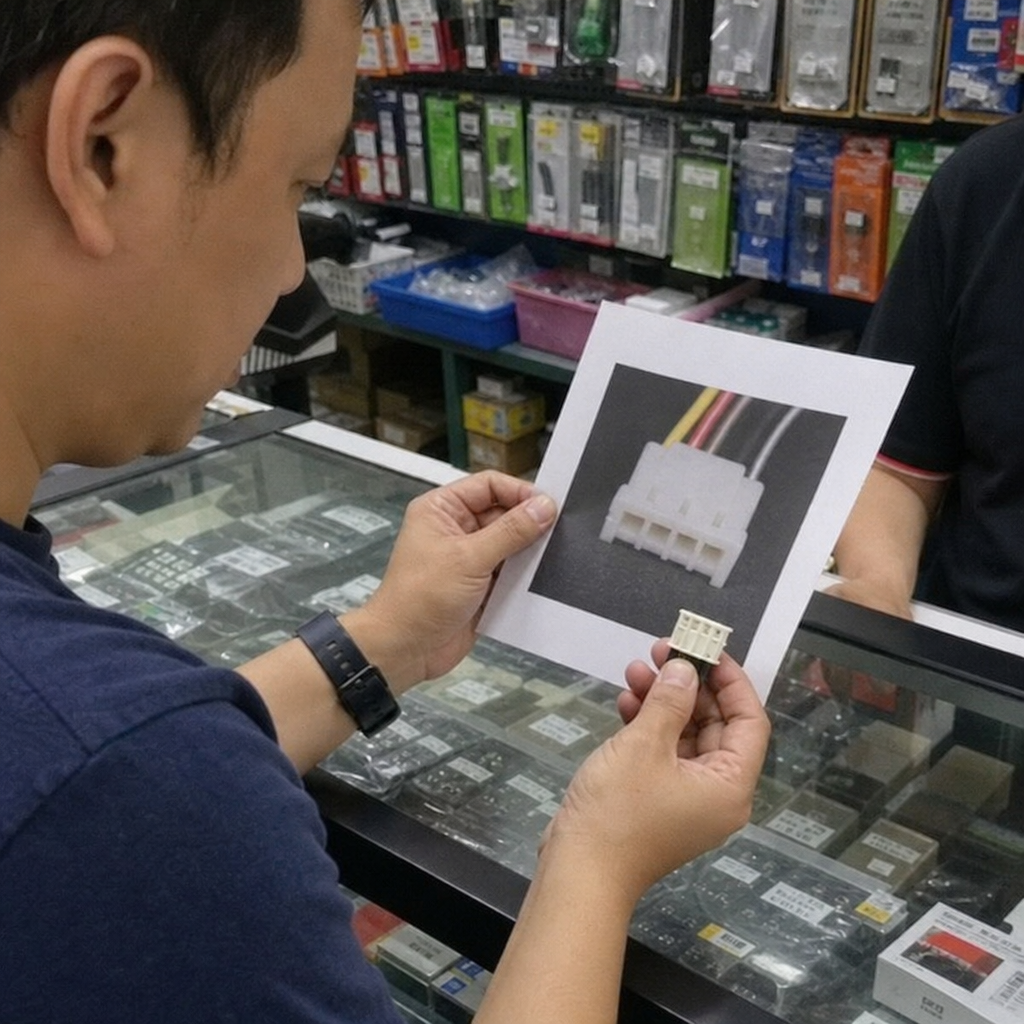
Prepare a note for each important item. A product photo helps explain its appearance, but include written requirements so the conversation does not stop at “something like this.” For replacement parts, photograph the original label and connector from several angles.
Your note should include:
Identity: Brand, model, part number, or a clear description of the function.
Compatibility: The device, operating system, connector, or equipment it must work with.
Quantity: What you want today, separate from any possible future order.
Condition: Whether you will consider used, repaired, or refurbished stock.
Acceptance check: What you need to see working before you agree to buy.
Download the note and reference images for offline access. Keep questions short when using translation software, and confirm important answers in writing. Asking one question at a time makes it easier to spot whether the answer actually addresses your requirement.
Arrange more than one payment option
China’s official visitor payment guidance supports linking eligible international cards to Alipay and WeChat Pay, alongside cash and other payment options. Set up your preferred method before shopping and retain a backup rather than relying on one app or card. Check the amount and any displayed charges before authorizing payment.
Ask the seller which payment methods they accept before beginning a lengthy demonstration. Keep the payment record with the receipt and product details. That gives you one place to look if you need to reconcile a purchase later.
How do you compare prices and avoid disappointing purchases?
Compare the same specification, condition, quantity, and support terms—not just the number quoted. A lower offer is only useful if it covers the product you actually need. Shenzhen’s shopping guidance recommends comparing sellers and keeping receipts; make both habits part of your buying process.
Ask for a complete quote before negotiating. Establish whether the price includes the necessary cable, adapter, installation, packaging, or other promised extras. Then ask whether there is flexibility for your actual purchase, without suggesting a future bulk order you do not intend to place.
Confirm condition instead of judging the box
Treat packaging as something to inspect, not proof of a product’s history. Hardware specialist Andrew “bunnie” Huang’s Shenzhen guide describes distinctions among surplus, refurbished, recycled, relabeled, and misrepresented goods. The practical lesson is to ask specific questions about condition and provenance rather than relying on a broad claim that something is “original.”
For a phone or computer, ask whether it has been used or repaired and what documentation supports the stated condition. For a component, request the manufacturer and full part number. If the explanation remains unclear, choose a purchase you can verify—or walk away.
Test the item you will take away
Use a purchase-specific checklist, not a demonstration chosen entirely by the seller. Agree on the checks before paying and make sure the final item matches the one you approved. If testing is not possible, decide whether you are comfortable accepting that uncertainty.
Cases and stands: Try the fit with your device and inspect access to buttons, ports, and cameras.
Cables and adapters: Ask to demonstrate the function you need, including data transfer or display output where relevant.
Audio accessories: Try pairing, playback, controls, and the microphone rather than listening briefly to music alone.
Phones and computers: Ask to inspect the stated configuration and demonstrate the features essential to your use.
Modules and parts: Match the full identifier and request an appropriate demonstration where practical.
These checks are a screening routine, not a substitute for technical validation. For unfamiliar equipment, consider whether you have the tools and knowledge to assess it properly. Do not let a successful quick demonstration replace a more important requirement you cannot verify.
Put after-sales promises in writing
Before paying, ask what happens if the item fails your agreed checks after you leave. Request clear terms covering any exchange period, exclusions, and the contact person. Do not treat a verbal promise of a “warranty” as a complete explanation.
Record the seller’s name, market, floor, stall number, and contact details. Ask for a receipt identifying the product and amount paid. Save any written promises alongside it so you do not have to reconstruct the conversation afterward.
Make market navigation a repeatable process
For easier market navigation, use a simple loop: locate, compare, pause, then purchase. Instead of collecting disconnected prices, attach each quote to a product specification and seller locati0n. A useful comparison note might read: “Cable, required length, demonstrated function, quoted quantity, included accessories, stall number.”
Try this flexible half-day plan:
Orient yourself. Find the directory, identify the relevant section, and note your entrance.
Collect comparable offers. Speak with several sellers using the same written requirements.
Take a break. Review the differences away from the counter and remove unsuitable options.
Return to your shortlist. Complete testing, confirm the final total, and request documentation.
Check your purchases. Match every item and accessory against your receipts before leaving.
Photograph a stall sign or business card with permission. Ask before photographing products or people, too. Keep your notes organized by building so a promising offer does not become a counter you cannot find again.
If you are visiting with someone else, agree on a meeting point before splitting up. Share the exact building name rather than saying “near the electronics market.” Small organizational choices help keep a Shenzhen shopping afternoon focused on the products rather than on retracing your steps.
Separate casual purchases from business sourcing
If your Shenzhen electronics visit is for a business, define what the visit must establish. A useful sample, a supplier introduction, and a production-ready purchasing decision are different outcomes. Decide which one you need before discussing larger quantities.
For an initial supplier conversation, request a written quotation that identifies:
The exact model, revision, and agreed specification.
Sample quantity and proposed order quantity.
Packaging and labeling requirements.
Availability, proposed lead time, and delivery arrangements.
Acceptance criteria and the process for handling defects.
Keep sample approval separate from approval of a later shipment. Huang’s sourcing guide emphasizes understanding product variation and using appropriate testing rather than treating all apparently similar goods as equivalent. Build your own inspection plan around the consequences of a failure, especially when the parts will go into products sold to others.
Do not spend your entire visit negotiating a unit price while leaving the specification unresolved. A slightly clearer requirement can be more valuable than a slightly lower quote.
Check the journey home before buying
Before purchasing battery-powered tech gadgets, check the rules for every flight on your itinerary. IATA’s passenger guidance treats power banks as spare batteries that belong in cabin baggage, not checked luggage, with additional restrictions applying to their carriage. Confirm current airline and departure-airport requirements before choosing a battery product.
For other purchases, make a final checklist covering destination import requirements, documentation, compatibility, and practical packing. Check the manufacturer’s stated electrical input and the accessories needed for use at home. If an essential compatibility question is unanswered, resolve it before payment rather than hoping an adapter will solve it.
Leave time to inspect everything again while returning to the seller is still practical. Keep receipts accessible and fragile items protected. Avoid making your largest, least familiar purchase the final rushed stop before departure.
Buy with a plan, leave with fewer surprises
The most useful Huaqiangbei visit is not necessarily the one with the fullest shopping bag. Choose a relevant market, compare like-for-like offers, test what matters, and document the deal. Whether you leave with a component, an accessory, or simply a clearer understanding of the electronics market, a focused approach makes the visit worthwhile.
Frequently Asked Questions About Huaqiangbei Electronics Market
What types of products can I find at the Huaqiangbei Electronics Market?
Huaqiangbei features a wide range of products, including individual electronic components, consumer electronics, phone accessories, and various gadgets. Each building within the market specializes in different categories, allowing for targeted shopping.
How do I navigate the different markets in Huaqiangbei?
To effectively navigate Huaqiangbei, it’s best to start with a clear shopping list and choose the market that matches your needs. For example, visit SEG Electronics Market for components, or Huaqiang Electronic World for gadgets. Familiarizing yourself with the building names and product categories will help streamline your visit.
What should I prepare before visiting the Huaqiangbei Electronics Market?
Before your visit, prepare a detailed shopping list, including product specifications, compatibility requirements, and a budget. It’s also beneficial to download relevant images and have translations ready if you don’t speak Chinese. Additionally, ensure you have multiple payment options available.
How can I ensure that I’m getting a good deal?
To secure a good deal, compare similar products among different sellers by checking specifications, condition, and support terms. Always request a complete quote before negotiating and ensure that you understand what is included in the price, such as cables or warranties.
What payment methods are accepted at Huaqiangbei?
Most sellers accept various payment methods, including cash, credit/debit cards, Alipay, and WeChat Pay. It’s advisable to confirm the accepted payment methods with the seller before starting any lengthy negotiations or transactions.