Back To Blog
Electric Toothbrush Wholesale: A Retailer's Buying Guide
Build your retail oral-care range with bulk electric toothbrushes selected around your customers, selling price, and replenishment needs.
A well-specified wholesale order should cover more than toothbrush handles: it should also establish compatible replacement heads, retail-ready packaging, and clear after-sales terms.
Use the buying specifications below to request a supplier quote and compare offers on the same basis.
Start with a wholesale quote request covering your preferred models, order quantity, delivery destination, and replacement-head requirements. Product availability, pricing, minimum orders, and customization must be confirmed with the supplier.
What should an electric toothbrush wholesale order include?
An electric toothbrush wholesale order should identify the exact product model, the contents of each retail pack, compatible consumables, commercial terms, and delivery requirements.
Ask for a written specification and itemized quotation before committing to stock. This gives your buying team a clear reference for checking samples, approving packaging, and receiving the shipment.
For a retailer preparing to buy electric toothbrushes, the starting checklist is:
Named product and model: Include the SKU, color, intended market, and agreed specification.
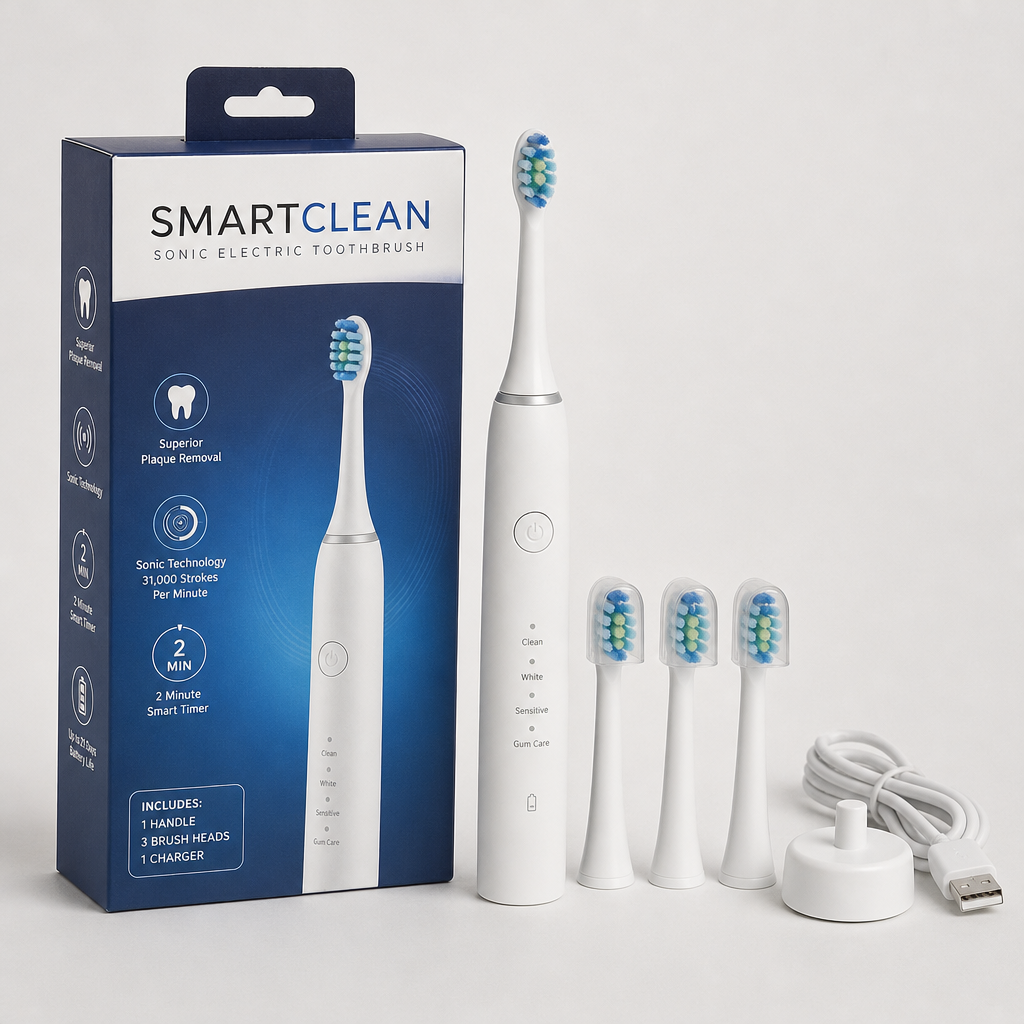
Retail-pack contents: Confirm the handle, brush heads, charging equipment, instructions, and any accessories individually.
Replacement-head supply: Request compatible head references, pack sizes, and separate ordering terms.
Wholesale terms: Obtain unit pricing, minimum order quantity, carton quantities, payment terms, and quotation validity.
Delivery and support: Record the dispatch estimate, delivery responsibilities, inspection process, and procedure for defective units.
Treat anything absent from the written offer as unconfirmed, including accessories shown in photographs.
Choose features your customers can understand
Select features that your store team can explain without relying on vague performance language. For an opening range, consider a straightforward everyday model before adding products with more complex controls or connected functions. Ask suppliers to demonstrate every feature you intend to advertise.
Brushing timer. A timer is worth evaluating against an established brushing recommendation: the American Dental Association recommends brushing for two minutes twice daily. Confirm the selected model’s actual timer behavior, including whether it signals intervals, stops automatically, or continues running. Do not assume every powered model works identically.
Bristle specification. Request the head size, bristle description, and intended user group. The ADA recommends soft-bristled toothbrushes; use that guidance when defining your buying brief rather than treating a firmer-feeling head as a premium feature. Verify the description against the sample and manufacturer documentation.
Pressure feedback and controls. If a supplier offers a pressure sensor, ask how it communicates with the user. Request a demonstration of any light, vibration, or speed change. For cleaning modes, obtain their names and operating instructions instead of relying on a mode count alone.
Charging and accessories. Specify the charging connection, supplied equipment, and any adapter requirements. Ask whether a travel case holds the handle alone or accommodates the head and charger as well. These are useful distinctions for customers comparing otherwise similar-looking packs.
Position each verified feature around a recognizable purchase decision: simple controls for an uncomplicated routine, documented charging arrangements for travel planning, or a clearly labeled refill system for future purchases.
Set a clear product specification before ordering
Use one specification sheet for every shortlisted electric toothbrush. This keeps a toothbrush bulk purchase focused on like-for-like products rather than attractive photographs or incomplete descriptions. Ask the supplier to mark unavailable or unverified details explicitly.
|
Specification |
Detail to request |
|---|---|
|
Product identification |
Brand, model, SKU, color, and barcode |
|
Brushing system |
Manufacturer’s description of the movement and operating modes |
|
Brush heads |
Included quantity, head reference, bristle specification, and compatibility |
|
Power supply |
Battery type, charging method, electrical input, and included equipment |
|
Battery claims |
Stated runtime, charging time, and the conditions used to measure them |
|
Retail packaging |
Pack dimensions, language, contents list, and product imagery |
|
Shipping configuration |
Units per inner pack, units per carton, carton dimensions, and weight |
|
Documentation |
Instructions, warranty terms, and relevant product-specific documentation |
Use this sheet again when reviewing a sample. If the sample differs from the quoted specification, resolve the difference before approval. Keep the final version with the purchase order so receiving staff know what to inspect.
Compare wholesale pricing beyond the unit cost
Wholesale pricing: request an itemized supplier quotation. No fixed unit price, order minimum, or delivery charge is specified here. Your buying decision should use confirmed figures for the exact model, quantity, packaging, and delivery arrangement under consideration.
Ask electric toothbrush suppliers to separate the following costs:
Product cost: Price per sellable retail unit at the requested quantity.
Packaging and customization: Any artwork, printing, tooling, setup, or special-pack charges.
Sample costs: Sample price, shipping, and any written credit arrangement.
Delivery costs: Freight, handling, insurance, and other charges included or excluded from the quote.
Replacement stock: Separate pricing for compatible heads and any agreed service stock.
For planning, calculate your estimated landed cost per sellable unit using all applicable costs, not just the quoted handle price. Then test your proposed retail price against selling expenses and your margin requirement. Treat uncertain charges as unresolved rather than assuming they are zero.
For example, compare a lower-priced handle-only offer with a pack that includes charging equipment and replacement heads. First establish the complete contents your customers need, then compare equivalent packages. A lower headline price is not enough information to choose between them.
Specify branded stock and replacement heads precisely
For an Oral-B electric toothbrush wholesale enquiry, include the complete model reference rather than requesting “Oral-B brushes.” Oral-B states that iO handles use iO-specific replacement heads and that its legacy brush heads do not fit iO handles. Keep the handle and refill references together in your order records and retail listings.
Apply the same discipline to other brands. Philips explains that most Sonicare models use standard click-on heads, but there are exceptions, including Philips One and older screw-on systems. Check compatibility by model number rather than assuming that one brand name means one universal fitting.
For any branded purchase, request:
Supplier identity and documentation supporting the stock’s stated origin.
Exact model numbers, pack configuration, and intended sales market.
Written clarification of warranty coverage for your locati0n and sales channel.
Matching replacement-head references and their current ordering terms.
Confirmation that images and descriptions match the units being supplied.
Do not present a supplier as an authorized distributor without verification. Likewise, avoid promising manufacturer-backed support until the applicable terms have been checked. A branded product request is not confirmation that a particular supplier can fulfill it.
Match the buying route to your retail plan
Decide whether your enquiry concerns an existing branded product, an unbranded model, or a private-label project. Ask each supplier which route it actually supports. Keep those enquiries separate because the specification, packaging approval, and commercial discussions may differ.
Existing branded products suit a buying brief built around named models. Prioritize exact pack identification, stock origin, refill compatibility, and written support terms. Avoid accepting a substitute model without reviewing its specification and contents.
Unbranded products require a particularly clear description of what customers will receive. Request product photographs, instructions, packaging details, and evidence for any performance statements. Agree how the product will be identified across invoices, listings, and repeat orders.
Private-label enquiries should define the requested branding work before pricing is compared. List the proposed logo placement, packaging language, artwork requirements, and approval process. Ask separately about setup charges, minimum quantities, sample stages, and ownership of approved artwork.
For a first order, consider limiting the range to products you can describe and support confidently. Expand only after reviewing your own sales, customer questions, and service experience rather than buying additional variants solely to reach a price tier.
Approve the sample and supplier documentation
Request a sample that represents the proposed production or stocked retail unit. Compare its handle, accessories, instructions, and packaging against the specification sheet. Ask the supplier to explain any difference between the sample and the goods that would ship.
Your sample review should include practical checks:
Open the retail pack: Record each component and compare it with the agreed contents list.
Follow the instructions: Check whether charging, controls, head fitting, and routine care are explained clearly.
Inspect presentation: Review print quality, model identification, barcode placement, and visible packaging damage.
Check advertised functions: Confirm that the sample demonstrates the features proposed for your listing.
Record the outcome: Photograph the approved configuration and document any required changes.
Separate your own sample observations from independent certification or clinical evidence. The ADA Seal of Acceptance, for example, reflects an evidence review against the ADA’s requirements; it is not a label to apply to an entire supplier’s range without checking the specific product. Verify any proposed Seal reference before using it in marketing.
Request documentation relevant to the exact product and destination market. Where specialist review is needed, arrange it before placing the production order. Supplier assurances alone should not replace the checks your business requires.
Plan the retail sale and the follow-up purchase
Prepare the customer-facing product information while the order is being finalized. Show the actual pack contents, explain the controls in plain language, and identify the correct replacement heads. Keep optional accessories separate from included items so customers can see what their purchase covers.
A practical merchandising brief should contain:
A clear product description: Who the selected model is intended for and its verified features.
An accurate contents list: Every included component, without borrowing details from another bundle.
A refill reference: The compatible head name or code and the matching stock locati0n or listing.
Support information: Where customers should direct setup questions, faults, and warranty enquiries.
Imagine a customer returning with the model number from their original purchase. Your staff should be able to identify the matching refill without opening unrelated packs or guessing from appearance. Build that lookup into your stock records before launch.
Also agree internally how to handle opened hygiene products, reported faults, and incomplete deliveries. Align customer-facing wording with the supplier terms you have actually secured, while obtaining any necessary review of your own retail policies.
Request a wholesale quote with a complete buying brief
When you are ready to buy electric toothbrush wholesale stock, send a concise brief that makes comparison straightforward. Name your preferred buying route, describe the intended retail customer, and state your initial quantity and destination. If you have not chosen a model, identify the features and pack contents you need rather than requesting an unspecified “best price.”
Include these details in your enquiry:
Business name, contact details, and selling channel.
Preferred brand and model, or a required feature specification.
Initial order quantity and any provisional replenishment plan.
Required retail-pack contents and replacement-head quantities.
Packaging language and any branding request.
Delivery destination and desired arrival window.
Requests for samples, documentation, warranty terms, and an itemized quote.
Ask the supplier to distinguish confirmed stock from products requiring production, and estimated timings from committed dates. Review the quotation against your specification before approving payment or shipment arrangements.
Next step: submit your buying brief to shortlisted suppliers and request written quotes for the same configuration. Choose your bulk electric toothbrushes on the strength of a verified product, workable economics, and clear support terms—not a headline discount alone.
Frequently Asked Questions About Electric Toothbrush Wholesale Purchasing
What is included in an electric toothbrush wholesale order?
An electric toothbrush wholesale order should include the product model, retail pack contents (handle, brush heads, charging equipment), replacement-head specifications, and clear commercial terms such as pricing and delivery requirements.
How do I ensure compatibility of replacement heads with toothbrush models?
It's essential to request exact model references and compatibility information from suppliers. Many brands, like Oral-B and Philips Sonicare, have specific head requirements that must match the brush model being ordered.
What factors should I consider when comparing wholesale prices?
When comparing wholesale prices, you should look beyond the unit cost and consider additional factors such as packaging costs, shipping fees, and any potential customization charges. An itemized quote from the supplier can help in making accurate comparisons.
How can I verify the quality of the electric toothbrushes before placing a bulk order?
Requesting samples that represent the product is crucial. Compare the sample against your specification sheet, check the features, and confirm that all components included match the intended retail pack.
What documentation is necessary when buying electric toothbrushes wholesale?
Ensure you obtain supplier documentation that verifies stock origin, warranty terms, and compliance with regulations for your market. It's important to have all relevant product-specific documentation to avoid issues with fulfillment and support.