Back To Blog
15+ Pet Supplies Products for Sale | Online Pet Store
Shop with a clearer plan for feeding, walking, grooming, play, and everyday cleanup. This pet supplies selection guide brings together 15 useful product types, with practical details to help you choose for your pet, your home, and your routine.
Whether you need one replacement accessory or a complete starter setup, focus on suitable sizes, useful features, and the full purchase cost—not just an appealing product photo.
Which pet supplies belong on your shopping list?
The right pet supplies are the ones that support your animal’s daily routine and fit how you actually care for them. Start with feeding, rest, safe handling, and cleanup, then add grooming tools, toys, and travel accessories where needed.
The 15 product types below focus mainly on common dog and cat needs; other animals require equipment designed for their species.
Before you buy pet supplies, note your pet’s measurements, current equipment, and anything that makes daily care awkward. A bowl that slides across the kitchen needs a different solution from one that is simply too small. Likewise, a travel carrier should be chosen around your pet and journey, rather than color alone.
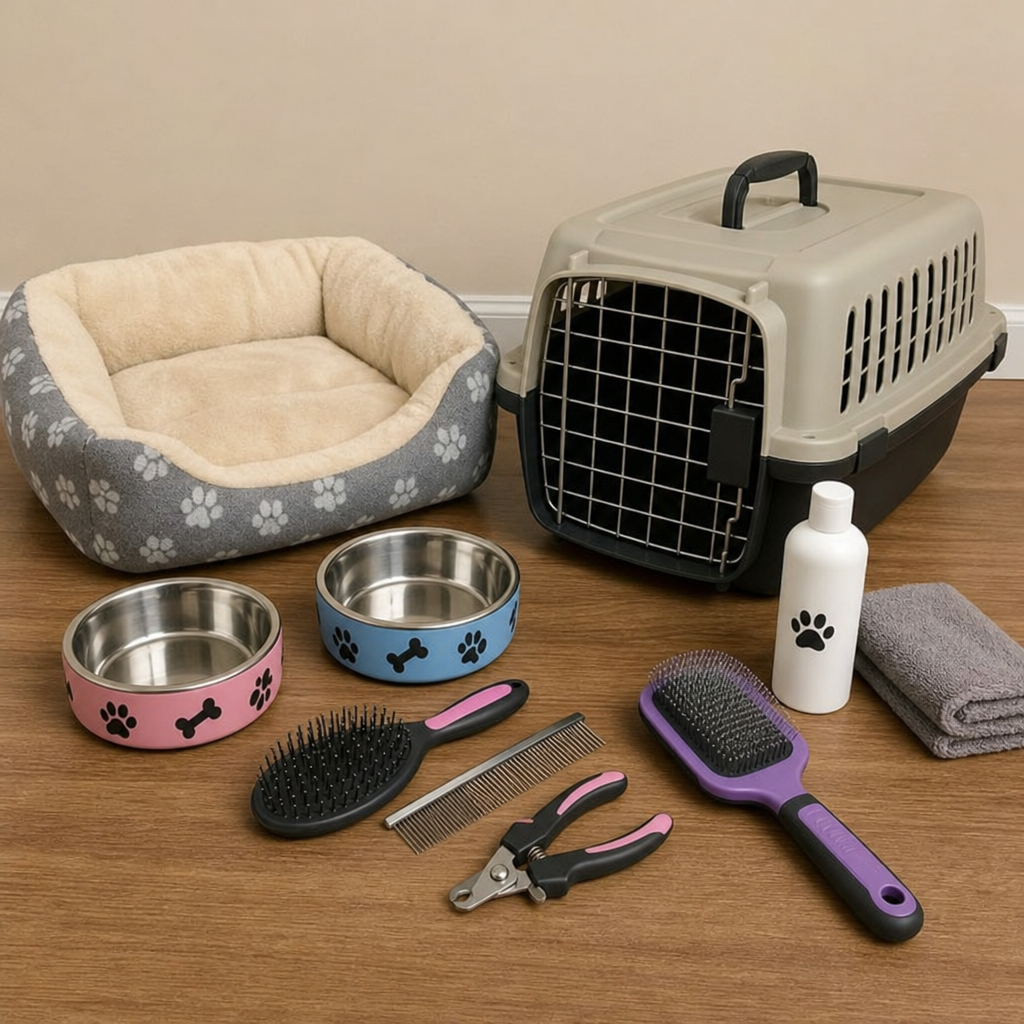
Feeding, rest, and everyday comfort
These basics earn their place through repeated use. Look for designs that fit the space available, make cleaning straightforward, and suit the way your pet eats or rests. Buying coordinated accessories can be appealing, but practical compatibility matters more than matching colors.
- Food and water bowls. Choose bowls with suitable capacity, a stable base, and surfaces you can clean thoroughly. Check dimensions rather than relying on labels such as “small” or “large.” For a shared kitchen, consider how easily you can lift, refill, and wash each bowl without spilling. Review any material and dishwasher-care information in the listing.
- Feeding mats. A feeding mat helps define the eating area and makes scattered crumbs or splashes easier to manage. Measure the space beneath your bowls and allow room around their edges. Look at the underside, edge height, and cleaning instructions. A mat that fits beneath both bowls can be more practical than separate pieces that shift apart.
- Pet beds. Start with your pet’s resting position: curled up, stretched out, or leaning against a raised edge. Compare the usable sleeping area, not just the outside measurements. Removable covers may simplify laundry, but check how both cover and filling should be cleaned. Make sure the bed fits its intended spot without blocking a doorway or walkway.
- Blankets and furniture covers. These accessories create a defined resting surface on a sofa, seat, or existing bed. Check coverage, fastening details, and washing instructions before choosing. If your goal is to protect furniture, confirm whether the item is described as water-resistant or waterproof rather than treating those terms as interchangeable. Measure the full area you want covered.
- Food storage containers. Choose a container around the food packaging and storage space you already use. Check its stated capacity, opening size, closure, and cleaning requirements. A large container is less useful if it cannot fit on your shelf or is awkward to move. Review the food manufacturer’s storage directions before transferring food out of its original packaging.
Walking and travel essentials
Accessories used outside the home need more than an attractive finish. Check fit, attachment points, closures, and the intended use stated by the manufacturer. When replacing one part of an existing setup, confirm that the new item works with the equipment you plan to keep.
- Collars. Measure your pet’s neck and compare it with the actual adjustment range provided for the collar. Check width, buckle style, and the attachment point for identification. A familiar size name does not guarantee a familiar fit across different products. Follow the manufacturer’s fitting guidance, and inspect the collar regularly for wear or loose components.
- Harnesses. A harness should suit your pet’s body shape and the activity you have in mind. Review chest and neck measurements, adjustment points, and where the lead attaches. Consider how the harness goes on, especially if your pet dislikes equipment passing over its head. Recheck fit after adjustment rather than assuming the first setting is correct.
- Leads. Compare lead length, handle design, fastening hardware, and any stated suitability limits. Think about where you walk: a busy pavement creates different handling needs from an open exercise area. Check compatibility with the collar or harness attachment. If you are replacing a worn lead, inspect the rest of the walking setup at the same time.
- Travel carriers. Check internal dimensions, access openings, ventilation, and closure design alongside any stated weight limit. Your pet’s shape matters as well as weight, so compare measurements carefully. For a particular journey, confirm the relevant transport requirements separately before buying. A listing described as suitable for travel does not establish acceptance by every transport provider.
- Waste bags and dispensers. Compare bag dimensions, pack quantity, opening method, and dispenser compatibility. A compact holder is useful only if it accepts the refill rolls you intend to buy. Work out the cost per bag when comparing different pack sizes. Keep disposal instructions in mind, and do not assume every bag carrying an environmental claim can go into household compost.
Grooming, play, and home cleanup
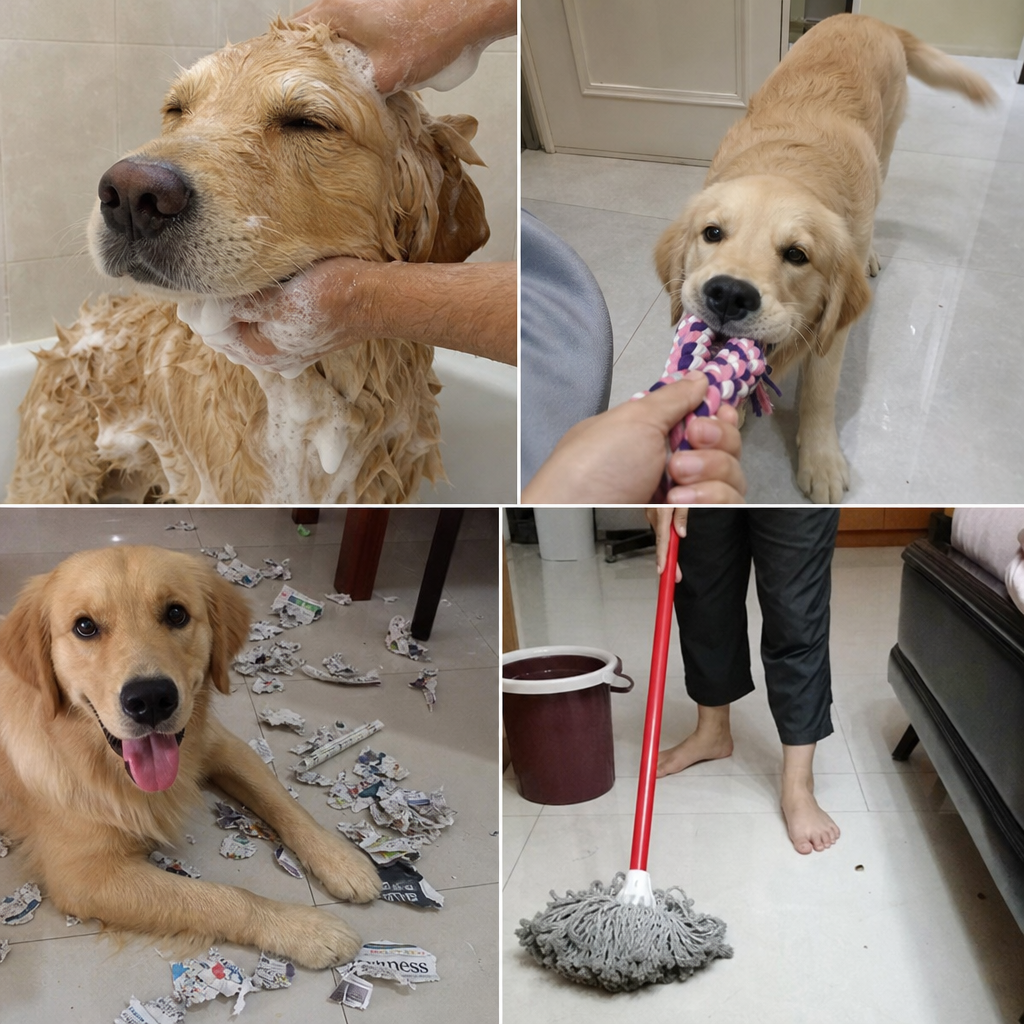
Choose these pet care products around a specific job rather than a broad promise. The right purchase should make an existing task easier, whether that means maintaining a coat, offering supervised play, or keeping a litter area manageable. Read suitability and care information before adding unfamiliar accessories to your routine.
- Grooming brushes and combs. Match the tool to your pet’s coat type and the grooming task described in the product information. Compare tooth or bristle design, handle grip, and cleaning access. A tool intended for one coat may not suit another. If you are unsure which type is appropriate, ask a qualified groomer before choosing equipment based only on appearance.
- Pet towels and grooming mitts. These can support routine wiping and drying after outdoor trips or washing. Compare dimensions, fabric-care instructions, and whether the design lets you reach the areas you need to clean comfortably. Keep intended use clear: a drying towel and a grooming mitt do different jobs. Choose something you can wash and dry conveniently between uses.
- Pet toys. Look for toys intended for your pet’s species, size, and play style. Review materials, construction, and supervision guidance, paying attention to detachable or small components. A toy for interactive play may not be intended for unsupervised chewing. Inspect toys regularly and replace damaged items rather than assuming a favorite remains suitable indefinitely.
- Litter trays and scoops. Compare tray dimensions, entry height, cleaning access, and the space available in your home. Check whether the scoop design suits the litter you use. A covered appearance may appeal to you, but access and usable internal space still matter. Review what is included, because a tray, lid, liner, and scoop may be listed separately.
- Litter mats and cleanup accessories. Choose a mat that fits the tray’s exit area without obstructing movement. Check surface texture, edge design, and how collected litter is removed. For other cleanup tools, match the product to the surface and task described. Avoid assuming one accessory can handle every floor type, fabric, or kind of mess.
Choose by fit, not by the product photo
When shopping for pet products online, photographs help you understand shape and layout, but measurements make the decision useful. Write down the relevant dimensions before comparing options. For beds and carriers, distinguish usable internal space from overall external size; for wearable accessories, use the manufacturer’s measurement method.
Picture the purchase in an ordinary day. If your dog comes home wet and rests beside the back door, a washable resting surface that fits that area may be more useful than a bulky bed elsewhere. If your cat’s litter tray sits in a narrow room, check entry clearance and cleaning access before choosing a larger enclosure.
Use this quick compatibility check before committing:
- Pet fit: Confirm species suitability, dimensions, adjustment range, and any stated limits.
- Home fit: Measure the intended locati0n, including door clearance and storage space.
- Routine fit: Check whether washing, assembly, refilling, or replacement parts suit your habits.
- Equipment fit: Confirm connectors, refill sizes, and compatibility with accessories you already own.
Compare prices and what is included
A useful price comparison starts with the same specification. Two similar-looking products may differ in dimensions, pack quantity, included accessories, or condition. Compare those details first, then check delivery charges and any additional pieces needed to make the item usable.
An online pet store may offer new products alongside clearly stated purchasing terms, while individual resale listings require closer attention to the item itself. If you are searching for craigslist pet supplies for sale, request current photos and clear details about condition, missing parts, cleaning history, and collection arrangements. Do not treat a low asking price as evidence that an item is suitable.
For any pet accessories sale, separate the discount from the actual value. A reduced-price carrier that does not fit your pet is still the wrong purchase. Where prices or availability are not shown, confirm them with the seller before making plans or arranging collection.
Prioritize these details in every listing:
- Exact contents: Identify whether you are buying one item, a multipack, or a bundle.
- Condition: Check for wear, damage, missing components, and clear photographs.
- Total cost: Include delivery, collection, refills, and essential accessories.
- Purchase terms: Read the seller’s stated return, exchange, and collection information.
Build a useful order without unnecessary extras
Start with the task you need to solve today. Replacing a damaged bowl does not necessarily mean replacing the whole feeding setup, and buying a new bed does not automatically require matching blankets. Keep working accessories where they remain suitable, then choose additions that fill a genuine gap.
For a new arrival, organize your list by routine: feeding, resting, handling, toileting, and play. Check what you already have before buying duplicates. If several people care for the pet, agree on sizes and intended uses so the order supports one consistent setup rather than several incomplete ones.
Use a simple buying sequence:
- Choose the essential task. Identify what the item needs to do and where it will be used.
- Record the measurements. Include your pet, the available space, and any existing equipment.
- Review the listing. Check specifications, care instructions, condition, contents, and price.
- Confirm unresolved details. Ask the seller before ordering if an important specification is missing.
Choose your next everyday essential
Start with the product type that solves your most immediate need, then compare fit, care requirements, and total cost. Keep your measurements beside you while reviewing listings, and resist substituting a similar-looking item when a key detail is unclear. The goal is a purchase that works in your actual routine—not simply a fuller basket.
Choose your essential, check the details, and buy with a clear purpose.
Frequently Asked Question About Purchasing Pet Supplies Online
What should I consider when buying pet supplies online?
When buying pet supplies online, consider your pet's specific needs, such as size and breed, the compatibility of the products with your current gear, and the measurements of both the item and your space. It's also important to read reviews and check the seller's return policy.
How can I ensure the quality of second-hand pet supplies from platforms like Craigslist?
When purchasing second-hand pet supplies, request current photos and detailed descriptions of the item's condition, inquire about any missing components or wear, and ask about the seller's cleaning history. Always verify the actual dimensions to ensure a good fit for your pet.
Are all pet toys safe for my pet?
No, not all pet toys are safe for every animal. It's crucial to choose toys that are appropriate for your pet’s size, species, and play style. Always check for detachable parts that could pose a choking hazard and replace damaged toys to ensure your pet's safety.
How do I know what size pet bed or carrier to buy?
Measure your pet while they are in their natural resting position. For beds, compare the usable sleeping area to the outer dimensions, and for carriers, check the internal dimensions and any weight limits stated by the manufacturer to ensure proper comfort and fit.
What are some tips for comparing prices on pet supplies?
To compare prices effectively, ensure you are looking at items with the same specifications (size, material, included accessories). Factor in shipping costs and any additional items needed for usability. Don’t let discounts mislead you; the product must still meet your requirements despite being on sale.