Back To Blog
Top Trending B2B Products from China
Trending products for B2B ecommerce from China are best treated as sourcing candidates, not guaranteed bestsellers.
This article identifies product categories worth investigating, separates broad trade signals from actual buyer demand, and outlines a practical process for comparing suppliers. Use it to build a shortlist you can test before committing to inventory.
Which products should B2B ecommerce buyers investigate?
Start by investigating digital accessories, home and office products, bags and textile accessories, pet accessories, and outdoor utility goods.
Chinese customs officials identified digital products, household and office appliances, clothing, and bags among major cross-border export categories in a 2025 briefing; pet and outdoor categories also featured at Hangzhou’s 2025 cross-border ecommerce expo. These signals establish sourcing relevance, not a verified ranking of individual bestsellers.
The product examples below are proposed research candidates within those categories. Validate each against your destination market, customer needs, and operating capabilities rather than assuming category visibility proves demand.
Digital accessories with a defined use case
Consider researching laptop stands, cable organizers, protective sleeves, and device storage pouches. Build the offer around a specific customer: an office-equipment distributor, school procurement team, or retailer assembling workstation bundles.
Ask suppliers for dimensions, material specifications, load limits where relevant, and compatibility details. Before adding powered accessories, establish what testing and documentation the exact product requires in your destination market; importer obligations extend beyond choosing a supplier.
Home and office organization products
Investigate drawer dividers, desk trays, document organizers, and modular storage components. For a B2B catalog, propose coordinated collections rather than unrelated items: matching finishes, compatible dimensions, and consistent packaging can form a coherent buying proposition.
Request assembled and packed dimensions before comparing quotations. Include a sample check for nesting, stacking, surface finish, and packaging protection, then decide whether the product earns its place in your assortment.
Bags and textile accessories
Research packing cubes, equipment pouches, reusable shopping bags, and protective covers. Specify the intended application first, such as promotional merchandise, travel retail, or equipment storage, so suppliers can quote against the same requirements.
Your specification should address fabric composition, stitching, zipper construction, dimensions, and branding placement. Ask for both an undecorated sample and a branded sample before approving a customized order.
Pet accessories for specialist retailers
Potential research candidates include grooming brushes, pet travel organizers, feeding mats, and washable bedding covers. Treat these as assortment ideas for pet retailers or distributors, not evidence that every item is trending.
For sampling, examine cleaning instructions, seams, detachable components, and material declarations. Define the intended animal size and use conditions in the specification, and investigate applicable safety requirements before purchase.
Outdoor utility goods
Investigate storage pouches, picnic accessories, garden-tool organizers, and compact utility bags. Start with an identifiable merchandising occasion or business customer instead of a broad “outdoor lifestyle” theme.
Ask suppliers to substantiate claims such as waterproofing, UV resistance, or load capacity. Exclude climbing equipment, protective equipment, or other safety-critical items from an initial shortlist unless you have the expertise to assess their requirements.
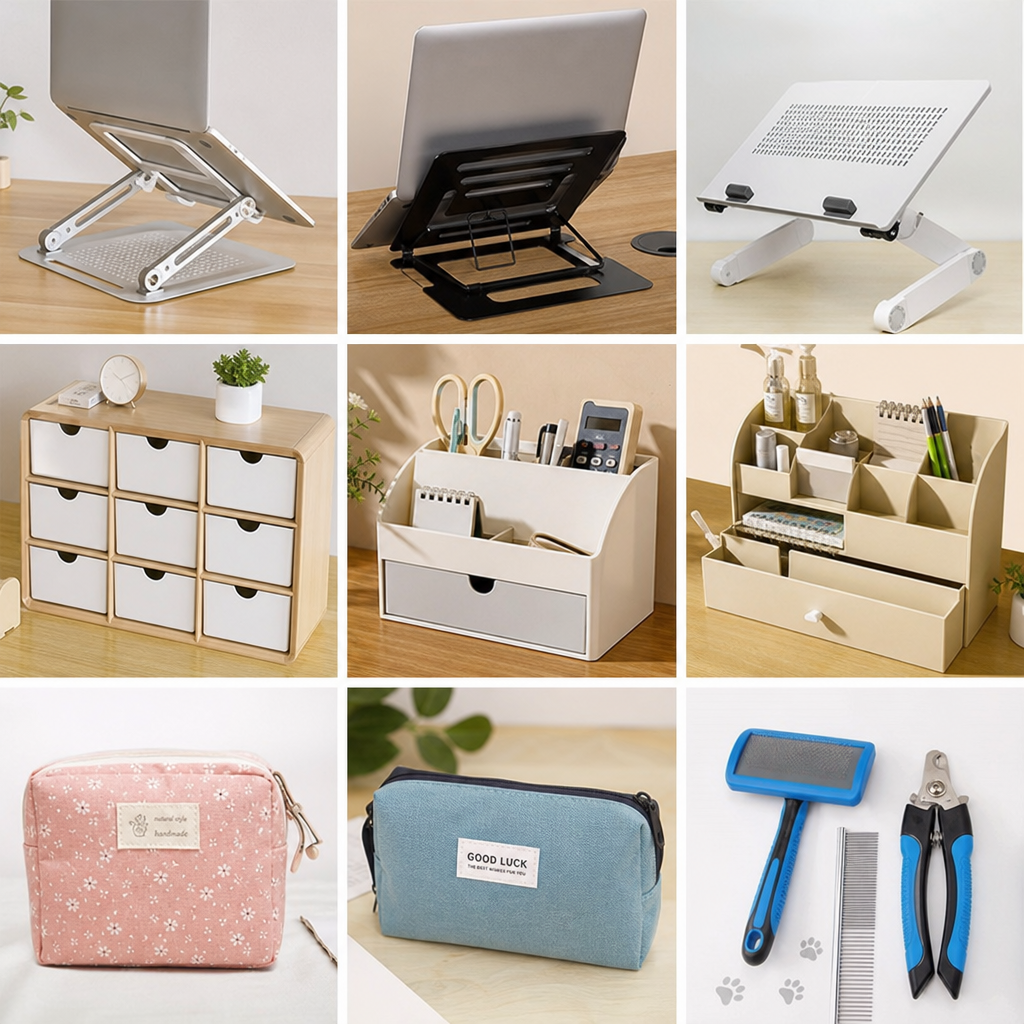
Trending products for B2B ecommerce from China: market analysis
Useful market analysis distinguishes three different questions: Is the category available from exporters? Are customers in your market interested? Will business buyers reorder it at a viable price? The trade evidence above helps with the first question; your research must address the other two.
For this shortlist, apply the following buying framework:
|
Buying factor |
Evidence to collect |
Decision it supports |
|---|---|---|
|
Customer fit |
Requests from existing accounts and interviews with target buyers |
Whether the item belongs in your catalog |
|
Demand durability |
Search patterns across comparable periods |
Whether interest looks seasonal or sustained |
|
Differentiation |
Competitor specifications, packaging, and buyer complaints |
What your offer should improve |
|
Reorder potential |
Buyer feedback on replenishment and assortment needs |
Whether to prioritize repeat business |
|
Operational fit |
Samples, packed dimensions, and fulfillment estimates |
Whether you can handle the product economically |
Use this framework to compare Chinese wholesale goods against a defined customer need. Do not let a crowded supplier catalog substitute for a purchasing rationale.
How do you validate demand before placing an order?
Validate demand by combining search-interest research, competitor review, and direct conversations with prospective buyers, then testing a limited assortment. Treat each source as one input rather than a verdict. In particular, Google Trends reports normalized search interest, not absolute search volumes or sales, so a high score does not establish commercial demand.
Use a repeatable validation sequence:
Define the buyer. Specify the retailer, distributor, or purchasing team you intend to serve and the problem the product addresses.
Compare relevant searches. Review terminology, geography, and comparable time periods rather than relying on one short-lived spike.
Audit competing offers. Record specifications, case quantities, delivery promises, and recurring complaints instead of comparing price alone.
Interview prospective accounts. Ask what they currently buy, what disappoints them, and what would justify changing suppliers.
Set a test decision. Define the evidence needed to reorder, revise, or abandon the item before launching it.
For example, ask office retailers whether they would prefer individually boxed desk organizers or coordinated display-ready sets. That conversation tests the proposed B2B offer, not merely whether someone likes the product.
How should you evaluate China product suppliers?
Evaluate China product suppliers against a written specification, documented capabilities, representative samples, and agreed commercial terms. A marketplace profile can support initial screening, but inspect the underlying evidence. Alibaba.com, for example, says its Verified Supplier program includes independent third-party assessments and downloadable reports; use those reports to examine the supplier rather than treating the badge as your complete purchasing decision.
When using a B2B marketplace in China, send shortlisted suppliers the same request for quotation. Include materials, dimensions, tolerances, packaging, order quantities, branding requirements, destination, and requested delivery terms.
Build these checks into your B2B sourcing China workflow:
Business identity: Compare the legal entity shown on the quotation, contract, and payment instructions; investigate discrepancies.
Production responsibility: Ask what the supplier manufactures directly and which processes it subcontracts.
Quality expectations: Approve a reference sample and document measurable acceptance criteria.
Commercial terms: Confirm minimum order quantities, tooling ownership, lead times, and remedies for nonconforming goods.
Inspection access: Agree when inspections can occur and how failed checks will be resolved.
Keep the initial scope manageable. Request clarification whenever a supplier answers a measurable requirement with a vague assurance such as “premium quality.”
Price the complete order, not just the product
For your internal comparison, build a cost model that includes goods, packaging, inspection, freight, insurance, customs clearance, applicable duties and fees, and warehouse receipt. CBP notes that imported goods can incur fees in addition to duty, with charges depending on the commodity, entry, and transportation method. Obtain shipment-specific estimates rather than assuming the supplier’s unit price represents your total cost.
Before committing, confirm tariff classification and current treatment with a qualified customs professional. Classification affects the import requirements and duty treatment that apply to particular China trade products; avoid applying a generic tariff assumption across an entire catalog.
For regulated consumer products, identify applicable testing and certification obligations early. CPSC states that covered general-use products require certification and that, for overseas-manufactured products, the importer must issue the General Certificate of Conformity. Request documentation tied to the exact model and applicable rules, not an unrelated certificate supplied as reassurance.
Stress-test the order using higher freight costs, slower sales, and additional handling. If the proposed margin depends on every assumption going perfectly, revise the product, quantity, or commercial terms before proceeding.
Turn the shortlist into a controlled pilot
Select a few closely related products, approve samples, and document your launch criteria. Track quote acceptance, account orders, quality complaints, fulfillment effort, and actual contribution after variable costs. Set your own thresholds before interpreting the results.
The practical goal is not to stock everything described as trending. It is to find an offer your business customers value, source it against clear requirements, and reorder only when the pilot supports that decision. Start with one buyer segment and one coherent product proposition, then expand deliberately.
Frequently Asked Questions About Trending Products for B2B Ecommerce from China
What types of products are trending for B2B ecommerce from China?
Trending products include digital accessories, home and office organization items, bags and textile accessories, pet accessories, and outdoor utility goods. Each category offers various options that can be tailored to specific customer needs.
How can I validate demand for a product before placing an order?
Demand can be validated by conducting market research, analyzing search trends, reviewing competitors, and engaging in direct conversations with potential buyers. Testing a limited assortment can also help gauge interest.
What factors should I consider when evaluating China product suppliers?
Evaluate suppliers based on their documented capabilities, product specifications, quality expectations, commercial terms, and business identity. It's crucial to verify that their offerings align with your needs.
How do I calculate the total cost of importing goods from China?
The total cost should include not just the product price but also packaging, inspection, freight, insurance, customs clearance, duties, and any other applicable fees. It's essential to build a comprehensive cost model before committing to an order.
What is the best approach to creating a pilot program for new products?
Start with a controlled selection of closely related products, approve samples, and document launch criteria. Track relevant metrics such as quote acceptance and quality complaints to evaluate the viability and success of the products before scaling up.