Back To Blog
Smart Watches Wholesale: Your Ultimate Sourcing Guide
Source wholesale smart watches for your retail store, online shop, distribution business, or branded merchandise program with a clear specification and purchasing plan.
Compare the features your customers need, evaluate samples, and request pricing against the same requirements before committing to bulk stock.
Start with a product brief—not just a low advertised unit price—to build an order you can confidently sell and support.
Which wholesale smart watches fit your business?
The right wholesale smart watches match your customers’ phones, intended use, price expectations, and support needs. Define those requirements first, then shortlist models whose documented specifications meet them. Treat features such as calling, activity tracking, and customizable watch faces as options to verify, not standard inclusions.
For a first order, focus on a clear customer need rather than the longest feature list. A retailer serving first-time smartwatch buyers might prioritize straightforward setup and readable notifications. A promotional buyer might place greater importance on presentation, branding approval, and consistent packaging.
Use these buying profiles to shape your shortlist:
- Retail and ecommerce: Specify compatible phones, customer-facing features, packaging contents, and the information needed for accurate product listings.
- Distributors and resellers: Request carton quantities, model identifiers, reorder terms, and a clear process for reporting defective units.
- Corporate merchandise buyers: Confirm branding options, artwork approval, presentation requirements, and delivery expectations before discussing production.
- Value-focused sellers: Set a target landed cost, then protect essential usability requirements rather than removing them to reach a lower price.
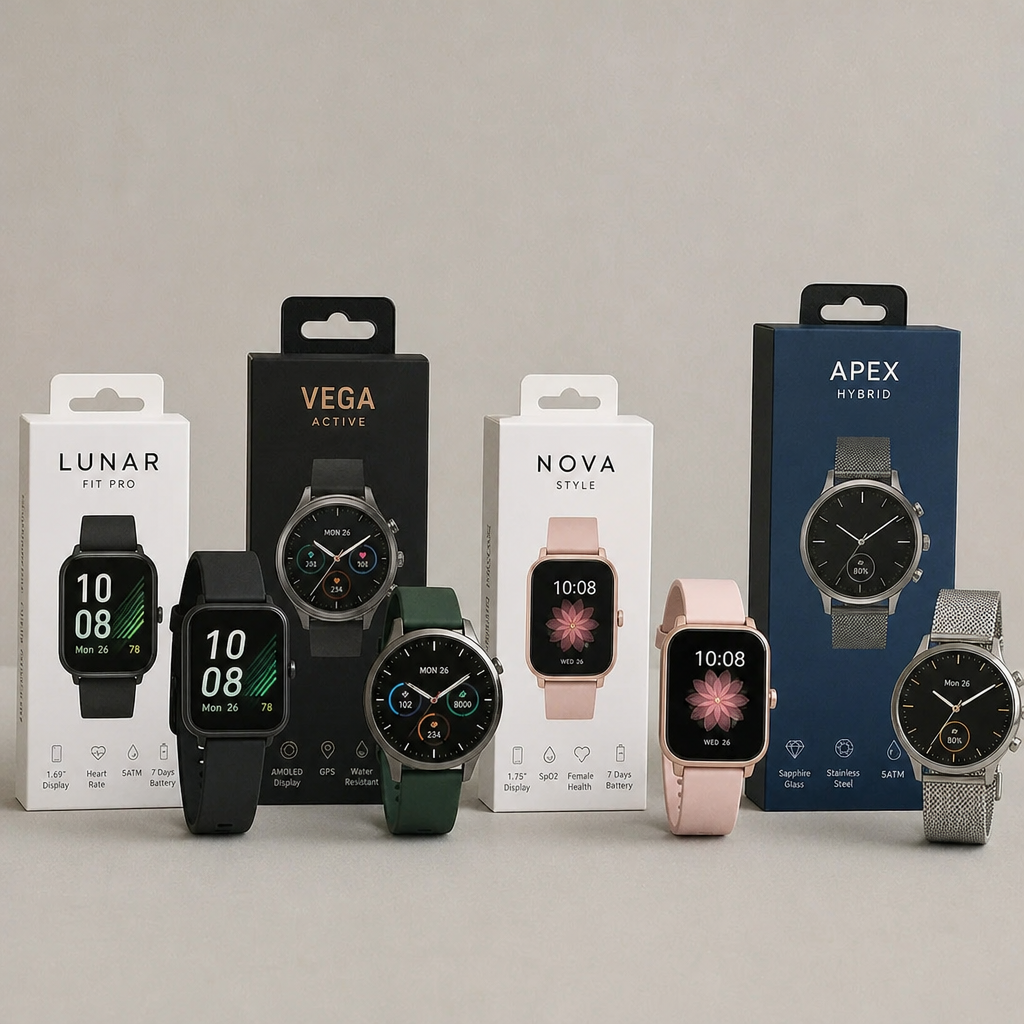
Build a product specification around everyday use
A specification should explain what the watch does and what the customer needs to use it. Ask for a model-specific datasheet rather than relying on lifestyle photographs or a feature graphic. Record any limitations alongside the headline benefits so your sales team can set realistic expectations.
Use the following checklist when comparing wholesale smartwatches:
|
Product detail |
What to confirm before ordering |
|---|---|
|
Phone compatibility |
Supported operating systems, minimum versions, and any feature differences between platforms |
|
Companion app |
Exact app name, publisher, setup instructions, account requirements, and supported languages |
|
Display and controls |
Screen specifications, touch controls, button functions, and readability during sample testing |
|
Calling and notifications |
Whether calls require a paired phone, which notifications appear, and whether replies are supported |
|
Battery and charging |
Stated operating conditions, charging method, supplied accessories, and replacement availability |
|
Case and strap |
Materials, dimensions, adjustment range, fastening method, and available variants |
|
Water resistance |
Documented rating, permitted uses, exclusions, and care instructions |
|
Package contents |
Watch, strap, charging accessory, instructions, and any other agreed items |
Separate essential requirements from optional extras. For example, if customers mainly want incoming-call alerts, do not pay for a calling feature until you have confirmed that it adds value for your audience. Keep the approved specification attached to your purchase agreement so substitutions require review.
Choose affordable smartwatches without losing the essentials
Set your minimum acceptable experience before negotiating price. Ask sample testers to complete the tasks your customers will perform: pair a phone, adjust the strap, read a notification, charge the watch, and find basic settings. Record where they need help rather than relying only on whether they like the appearance.
Imagine two samples that look almost identical in a product photograph. One has clear setup instructions and an easy-to-identify charging connection; the other leaves the tester searching for help. For a business selling to first-time users, those observations deserve a place in the buying decision alongside the quoted price.
When assessing affordable smartwatches, decide which compromises you can explain honestly. A smaller color selection may be acceptable for your range, while an unclear app requirement may conflict with your customer promise. Choose the model that meets the brief, not simply the one with the most icons on its packaging.
Request transparent wholesale pricing
Pricing should be tied to an identified model, quantity, configuration, and delivery basis. Request a written quotation that separates the product cost from optional services and shipping-related charges. Until those details are confirmed, treat an advertised starting price as an invitation to enquire rather than a complete purchasing cost.
For comparable quotations, ask each supplier to address:
- Order quantity: Minimum order quantity, quantity breaks, and whether colors or strap variants can be mixed.
- Product configuration: Exact model, included accessories, packaging format, and any requested changes.
- Samples: Sample price, delivery charges, and whether any sample payment can be credited against an order.
- Customization: Artwork preparation, logo application, packaging changes, setup charges, and approval stages, where offered.
- Delivery: Dispatch locati0n, freight basis, estimated schedule, and responsibility for import-related costs.
- Commercial terms: Payment stages, quotation validity, defect handling, and conditions attached to discounts.
Compare smart watch deals using the total cost of getting saleable stock ready for customers. For your internal budget, include product charges, freight, applicable import costs, inspection, and agreed preparation expenses. Keep recoverable taxes and accounting treatment separate according to your business’s circumstances.
A lower unit quote should prompt a closer comparison, not an automatic purchase. Check whether both offers include the same charger, packaging, inspection scope, and after-sales terms. Ask the supplier to explain every difference before approving payment.
Approve samples before scaling the order
Use samples to turn supplier descriptions into an approval record. Test the configuration you intend to buy, including the relevant strap, charging accessory, instructions, and app. If the production configuration will differ, document those differences and decide whether another sample is necessary.
Give testing a repeatable structure:
- Inspect the physical product. Check the case, screen, strap fastening, buttons, charging contacts, and packaging against the specification.
- Complete setup from the instructions. Record each step, required permission, account requirement, and point of confusion.
- Test advertised functions. Verify notifications, controls, and other agreed features using representative compatible phones.
- Review charging and use. Note the settings and usage pattern so observations have context rather than becoming unsupported battery-life claims.
- Document acceptance. Photograph the approved sample and record its model, app version, accessories, and any agreed corrections.
Ask for written confirmation that production will follow the approved configuration. Establish how changes to components, software, packaging, or accessories will be communicated. Agree on an inspection and acceptance process before the balance payment becomes due.
Verify documentation and responsible product claims
Request documents for the exact model and intended sales market, then check that names and identifiers match the product. Avoid treating a folder of unrelated certificates as sufficient evidence. For U.S. sales, have a qualified compliance specialist assess the applicable requirements before committing to inventory.
For Bluetooth-enabled products, verify qualification through the Bluetooth SIG’s qualified product database. The SIG advises resellers of another company’s product to ensure that the company has completed qualification for that product. Use the model and company details to guide your check rather than accepting a Bluetooth logo alone.
Private labeling needs a separate review. Bluetooth SIG states that branding or rebranding a Bluetooth product requires your company to join the SIG and complete the qualification process; a supplier’s qualification cannot simply be inherited. Confirm the route before approving branded artwork or packaging.
Keep wellness descriptions within the product’s supported intended use. FDA distinguishes healthy-lifestyle software unrelated to diagnosing, treating, or preventing disease from medical-device functions. Do not turn an activity or wellness feature into a diagnostic promise in your listings.
Treat the companion app as part of the product
Include the companion app in your supplier review, not just your sample demonstration. Ask who maintains it, how customers receive support, which permissions it requests, and how an account can be deleted. Request a written explanation of the expected support period and update process.
The FTC recommends that connected-device businesses explain the extent of security updates and how those updates will be delivered. Use that guidance to shape your supplier questions and the information you pass to customers. Do not promise indefinite support unless you have a documented basis for doing so.
Prepare a short setup resource using the approved instructions. Include the correct app publisher, pairing sequence, charging guidance, and troubleshooting contact. Review it whenever an approved product or app change affects the customer experience.
Plan packaging, shipping, and stock arrival
Specify packaging according to how you intend to sell or distribute the watches. Ask for photographs or samples showing the product presentation, labels, instructions, and accessory placement. For ecommerce, include your own fulfillment requirements in the brief rather than assuming retail packaging meets them.
If the watches contain lithium batteries, confirm the shipping arrangements with the supplier and carrier. U.S. Department of Transportation hazardous-materials rules cover lithium batteries, including those contained in electronic devices, and shipment requirements depend on the configuration.
Have the responsible shipping parties establish the applicable packaging and documentation requirements.
Agree on the arrival checks before dispatch. Record carton counts, model quantities, visible damage, and any inspection results when stock arrives. Keep enough identifying information to connect an issue to the relevant order and shipment.
Set after-sales terms before purchase
For bulk smart watches, make defect handling part of the commercial agreement rather than a conversation saved for later. Ask what evidence is required, how quickly a claim must be reported, and who pays any return freight. Distinguish supplier support from the commitments your business makes to its own customers.
Confirm whether the proposed resolution involves replacement units, parts, repair, credit, or another agreed remedy. Establish the approval process and any exclusions in writing. If spare straps or charging accessories matter to your offer, request their availability and terms separately.
Use the same discipline for reorders. Retain the approved specification and ask whether the model, app, accessories, and packaging remain unchanged. Review any proposed substitution before placing repeat stock into an existing listing.
Start your bulk smartwatch enquiry
Ready to compare wholesale smart watches in bulk against a clear buying brief? Prepare the details below and use them to request a model-specific quotation. A focused enquiry gives suppliers a concrete basis for proposing suitable products and explaining any limitations.
- Your business type, sales channel, and destination market.
- Expected order quantity and preferred mix of colors or straps.
- Target customer, essential features, and compatible phone requirements.
- Target purchasing budget and preferred delivery basis.
- Packaging, language, branding, and accessory requirements.
- Sample requirements, inspection expectations, and desired delivery window.
Request a detailed wholesale quotation and sample terms before committing to production. Ask for the exact model, complete specification, itemized pricing, supporting documentation, and written after-sales conditions. Move forward when the sample and commercial terms support the product promise you intend to make.
Frequently Asked Questions About Wholesale Smartwatches
What should I consider when selecting wholesale smartwatches?
When selecting wholesale smartwatches, consider factors such as compatibility with customer devices, essential features, pricing, bulk order requirements, and potential after-sales support.
How can I ensure the quality of bulk smartwatches before purchasing?
To ensure quality, request product samples, verify specifications against your requirements, and inspect the watches for performance, usability, and compliance with safety standards.
What are the typical minimum order quantities for wholesale smartwatches?
Minimum order quantities can vary by supplier but typically range from 50 to several hundred units, depending on the model and manufacturer.
Are there customization options available for wholesale smartwatches?
Yes, many suppliers offer customization options, such as branding with your logo, specific packaging, and adjustments to software or features based on your business needs.
What after-sales support should I expect from suppliers of wholesale smartwatches?
Suppliers should provide details on warranty terms, defect handling processes, replacement policies, and the extent of customer support they will offer for the devices.