Back To Blog
How to Start a Private Label Electronics Brand?
Starting a private label electronics brand means working with a supplier to sell products under your own name, with a clear plan for quality, compliance, pricing, and customer support.
Start with one customer problem and one well-defined product rather than a broad catalog.
This article walks through choosing that product, evaluating suppliers, checking costs, and preparing a launch you can support.
What does starting a private label electronics brand involve?
A private label electronics brand combines an externally manufactured product with your own branding, positioning, and customer experience.
For your launch, define exactly what the supplier provides and what your business controls: product specifications, packaging, instructions, sales channels, and after-sales service. Treat those responsibilities as part of the product, not administrative details to resolve later.
When comparing private label solutions, ask suppliers to quote against the same scope:
Branding an existing product: Specify the logo placement, packaging, included accessories, and instructions you need.
Modifying an existing design: Identify proposed changes to materials, dimensions, components, or functionality, and request a feasibility review.
Developing custom tech solutions: Define the engineering work, ownership, validation, and ongoing technical support before commissioning development.
For a first launch, prioritize a scope you can afford to evaluate thoroughly. If a feature does not clearly improve the buyer’s experience, leave it out of the initial brief. Your starting advantage should be a specific, credible reason to choose the product—not customization for its own sake.
Choose a customer problem before choosing a product
Start by writing a narrow customer statement: “We help remote workers connect their desk equipment without confusing setup.” That gives you a useful filter for product selection, instructions, photography, and support. “We sell electronics” does not tell you which purchase deserves your attention first.
Study competing listings and customer reviews for unresolved frustrations. Look for complaints about compatibility, unclear specifications, awkward controls, missing accessories, or difficult returns. Use these observations as research prompts, then speak with prospective buyers to understand their actual setup and expectations.
Build a shortlist and assess each candidate against four questions:
Customer value: What specific task will this product make easier?
Verification: Can you independently check its important performance claims?
Support: Can your team explain setup and troubleshoot likely problems?
Commercial fit: Can the product remain worthwhile after fulfillment, marketing, and returns?
Choose one lead product and define what would disqualify it. For example, decide in advance that undocumented compatibility or unavailable test evidence will stop the project. This keeps enthusiasm from replacing evaluation.
Turn the idea into a written product brief
Before contacting suppliers, prepare a brief that makes your expectations inspectable. Include the intended customer, use environment, required functions, compatibility, materials, accessories, packaging, and target sales market. Separate essential requirements from preferences so suppliers can flag trade-offs without silently changing your priorities.
Replace vague language with questions that require concrete answers. Instead of requesting “premium connectivity,” specify which devices and functions you expect to support. Ask suppliers to identify limitations, required cables, operating conditions, and the evidence available for each proposed claim.
Your electronics manufacturing brief should also identify the deliverables beyond the device. Request draft instructions, labeling artwork, packaging dimensions, available compliance documents, and a proposed quality-control plan. Keep a revision number on the brief so every quotation and sample can be traced to the same requirements.
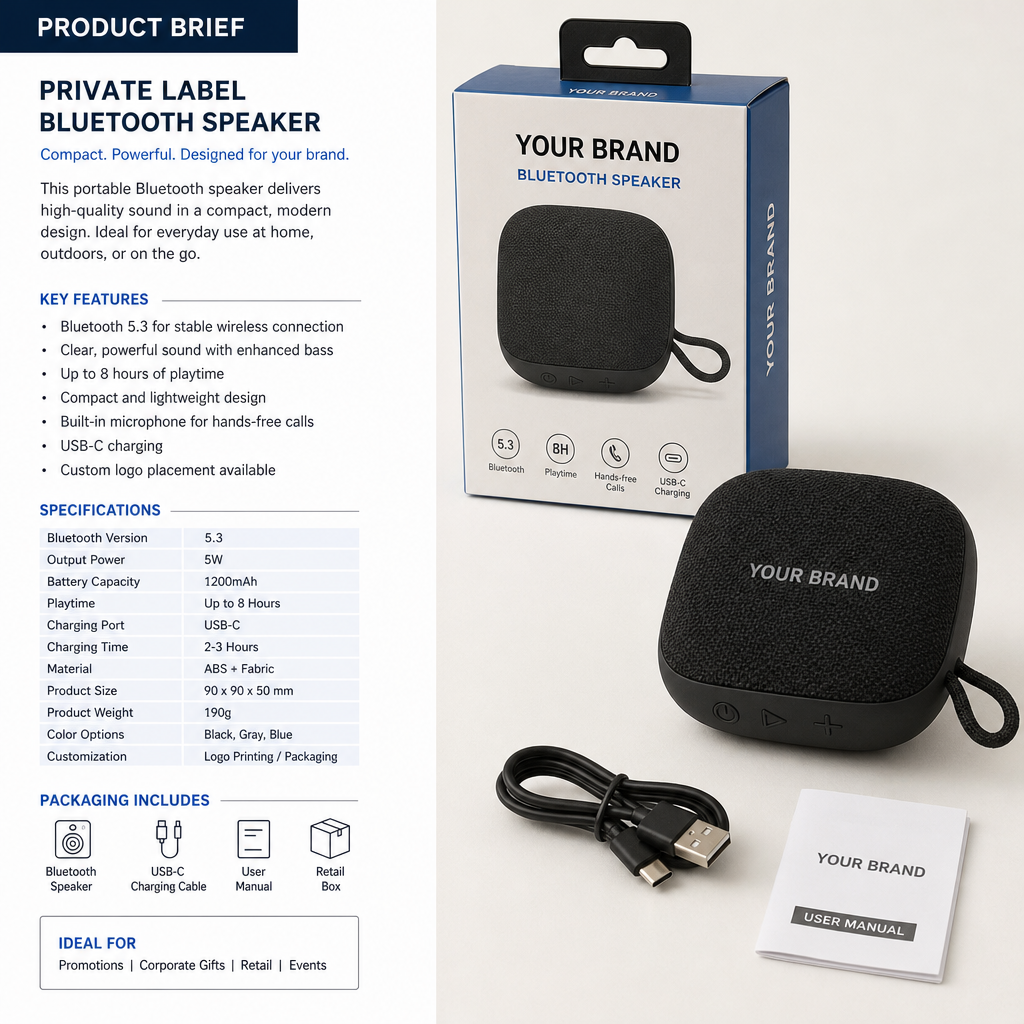
How do you evaluate private label suppliers?
Evaluate private label suppliers by requiring evidence against your product brief, reviewing samples, and documenting how production and defects will be handled. Compare the complete offer rather than selecting the lowest unit price. Keep unresolved questions visible until the supplier answers them in writing.
Send a consistent request for quotation to each candidate. Ask for the legal business identity, production locati0n, minimum order quantity, customization scope, sample process, production milestones, and payment terms. Clarify whether you are dealing with the factory, a trading company, or another intermediary, and identify who will resolve technical problems.
Use a supplier scorecard with these categories:
|
Area |
What to request |
|---|---|
|
Product fit |
Written specifications, limitations, and sample availability |
|
Quality control |
Inspection procedures, defect definitions, and traceability approach |
|
Documentation |
Relevant reports tied to identifiable product models |
|
Commercial terms |
Itemized pricing, payment milestones, and shipping responsibilities |
|
After-sales support |
Defect remedies, replacement arrangements, and escalation contacts |
For electronics wholesale offers, ask separately about unbranded stock, branded inventory, and future reorders. Confirm whether your requested configuration is repeatable and how substitutions will be approved. Do not assume an attractive sample establishes the terms for every later shipment.
Validate samples before approving production
Create a sample evaluation plan before the products arrive. Check the ordinary customer journey: opening the package, identifying accessories, reading instructions, connecting the device, and using each advertised function. Record both successful results and confusing moments.
For a connection accessory, build a compatibility matrix around the devices and functions you intend to advertise. Record the exact setup, cables, software version where relevant, and outcome. Use qualified laboratories for electrical safety and other specialist testing; keep informal usability checks separate from technical certification.
Your approval checklist should cover:
Function: Each promised feature works under documented conditions.
Construction: Connectors, controls, finishes, and assembly match the brief.
Customer information: Instructions, warnings, and compatibility limits are understandable.
Packaging: Contents, labels, and protective materials match the approved design.
Production reference: An approved sample and specification revision are retained.
Ask the supplier to agree on inspection checkpoints and written approval before component substitutions. Specify what happens when a batch fails acceptance criteria, including rework, replacement, or rejection. Settle those decisions before authorizing the production order.
Resolve compliance for the product and sales market
For a U.S. launch, investigate requirements for the exact device rather than relying on a supplier’s general assurance. The FCC states that radio-frequency devices subject to equipment authorization must meet applicable requirements before importation or marketing. Have a qualified specialist confirm the authorization pathway and documentation for your proposed configuration.
CPSC certification requirements depend on the applicable product safety rules. Manufacturers and importers of general-use products covered by those rules must issue the relevant written certificate of compliance. Check the CPSC’s current guidance, including applicable import filing requirements, instead of assuming every electronic product needs the same certificate.
If your product contains lithium batteries, investigate transport requirements early. PHMSA explains that lithium cells and batteries offered for transportation must meet applicable UN 38.3 design-test requirements and provides guidance on test summaries. Ask for documentation identifying the actual battery design and review shipping arrangements with an appropriately qualified logistics provider.
Organize a product compliance file containing the reviewed reports, model identifiers, specifications, labels, instructions, and responsible-party details. Ask your adviser which design changes require reassessment. Make document approval a launch milestone, not a task left until goods are ready to ship.
Build a cost model around the delivered sale
Set your budget from the full order cycle, not the supplier’s unit quotation. Include product development, samples, testing, packaging, inspections, freight, import charges, storage, fulfillment, selling fees, support, and a returns allowance. Obtain current quotes for costs you cannot yet verify rather than filling the spreadsheet with optimistic assumptions.
Separate one-time launch expenses from recurring costs. This lets you examine both the cash required to get started and the contribution from each future order. Keep taxes and accounting treatment subject to professional review.
Use this planning calculation:
Contribution per order = net sales revenue − landed product cost − selling and fulfillment costs − expected return and support costs.
Then test a less favorable scenario: slower sales, higher acquisition costs, more replacements, or delayed replenishment. Identify the point at which you would pause advertising or stop reordering. Avoid approving a larger minimum order solely to obtain a lower unit price; first check how much cash remains available for operating needs.
Make the brand useful beyond the logo
Give your branded tech products a consistent promise that your specifications and service can support. For a desk-accessory brand, that might mean straightforward compatibility information and clear setup guidance. Express that promise through product pages, packaging, instructions, and support replies—not just visual design.
Before committing to a name, conduct trademark clearance research. The USPTO recommends checking federal records and other resources, including common-law use, for confusingly similar marks associated with related goods or services. Consider professional advice before investing in packaging or filing an application.
Develop your product-page content from verified evidence. Explain supported uses, included accessories, setup requirements, and limitations in plain language. Replace unsupported words such as “fastest” or “universal” with specific information you can substantiate, and show the actual product configuration customers will receive.
Launch with clear support and controlled inventory
Choose an initial sales channel based on where you can reach buyers and manage the customer experience. Build a launch checklist covering product-page accuracy, stock records, fulfillment, support contacts, return handling, and replacement inventory. Run a test order through the entire process before inviting customers to purchase.
Prepare support materials around the sample tests. Include setup instructions, a compatibility guide, troubleshooting steps, and a clear route for unresolved problems. Define how your team will record reported failures and escalate potential safety concerns.
If you offer a written consumer warranty, review its terms for applicable federal and state requirements. The FTC explains that written warranties create obligations and that certain warranty terms must be available before purchase. Have your policy reviewed rather than copying another brand’s wording.
Keep the first inventory commitment within a budget you can sustain if sales disappoint. Set review points for customer questions, return reasons, fulfillment errors, and contribution after marketing. Use those findings to correct the offer before increasing purchasing or advertising commitments.
Expand only after the first product earns its place
Set expansion criteria before adding more products. Require acceptable quality results, manageable support demand, reliable replenishment, and a contribution margin that meets your operating plan. Review these together; sales volume alone should not determine whether you reorder.
Use customer feedback to identify the next useful addition. Ask whether buyers need a complementary accessory, clearer guidance, or an improved version of the original product. Keep a prioritized improvement log and separate recurring problems from isolated preferences.
As you expand, maintain version records for specifications, components, packaging, and instructions. Review changes with the appropriate technical and compliance advisers before approval. Your goal is a catalog you can explain, verify, and support—not simply a larger number of listings.
Start narrow and make each commitment deliberate
Begin with one customer, one problem, and one product brief. Evaluate suppliers against that brief, approve evidence rather than promises, and budget for the complete customer experience. Before placing your first production order, make sure your quality plan, compliance review, costs, and support process are ready together.
Frequently Asked Questions About How to Start a Private Label Electronics Brand
What is a private label electronics brand?
A private label electronics brand is a business model where a company collaborates with manufacturers to produce products that are branded under the company's name. This allows businesses to sell electronics without directly manufacturing them, providing the opportunity to establish their own brand identity.
How do I choose the right product for my private label electronics brand?
Start by identifying a specific customer problem and then perform market research to find a product that offers a solution. Focus on customer feedback, competitor analysis, and your unique selling proposition to select the most suitable product to launch.
What should I include in my product brief for suppliers?
Your product brief should detail the intended customer, use environment, required functions, compatibility, materials, packaging, accessories, and target sales market. Clearly separate essential requirements from preferences to facilitate effective communication with suppliers.
How can I evaluate private label suppliers?
Evaluate suppliers by requesting written evidence that meets your product brief, reviewing samples, and assessing their quality control processes. Use a scorecard to compare factors like product fit, quality assurance, documentation, commercial terms, and after-sales support.
What compliance regulations do I need to consider for electronics products?
Compliance regulations vary based on the type of product and the target market. For instance, in the U.S., you should ensure products meet FCC requirements for electronic devices and adhere to safety regulations set by the CPSC. It's essential to consult qualified specialists for specific compliance documentation and certifications needed for your product.