Back To Blog
How to Start a Phone Accessories Business?
Starting a phone accessories business means choosing a specific customer, sourcing dependable products, and building a sales channel that leaves enough margin after fulfillment, returns, and marketing.
This article explains how to validate demand, select mobile accessories, estimate startup costs, and launch a focused operation.
The goal is to test a workable business before committing to a large inventory order or retail lease.
What do you need to start a phone accessories business?
You need a defined customer group, a focused product range, reliable suppliers, a realistic budget, and a way to accept and fulfill orders. Before launching, check the registration, tax, licensing, and insurance requirements that apply to your location and business activities. In the United States, these requirements vary by jurisdiction and business structure.
Start with a simple business plan rather than an elaborate document. Write down who you serve, which problem you solve, what you will sell, and how customers will discover you. Add your expected costs and the evidence you need before expanding.
A useful starting checklist is:
Customer: Identify a buyer with a specific need, such as commuters seeking compact charging gear.
Offer: Choose products that solve that need without creating an unmanageable catalog.
Supplier: Request samples, written specifications, delivery terms, and a defect policy.
Sales channel: Decide where you can realistically reach and support buyers.
Economics: Estimate the contribution each order makes toward overhead and profit.
Operations: Set up inventory records, shipping procedures, and customer support.
Treat these as connected decisions. An attractive product is not a strong starting point if you cannot explain its compatibility, replenish it reliably, or sell it profitably.
Find a customer niche before choosing products
Begin with customer problems, not a wholesaler’s catalog. The Small Business Administration recommends combining market research with competitive analysis to understand potential customers and identify a competitive advantage. For this business, investigate what people need, where they already shop, and what those shopping experiences leave unresolved.
Possible directions include travel-friendly mobile gear, protective accessories for active users, desk setups for remote workers, or coordinated cases and straps for style-conscious shoppers. You could also explore business phone accessories for organizations that need consistent equipment across employee devices.
Choose one primary audience initially. “Accessories for everyone” gives you little guidance when deciding which devices to support, what photographs to produce, or where to advertise.
Use a lightweight research process:
Review competing stores. Record their positioning, product range, delivery promises, and product information.
Read customer feedback. Look for recurring questions about fit, durability, confusing specifications, or missing components.
Speak with potential buyers. Ask what they bought recently, what disappointed them, and how they chose a seller.
Test a specific offer. Present a small collection or product concept and observe actual inquiries or purchases.
Write a positioning statement: “We help commuters build a compact charging kit with clearly explained compatibility.” Use it to filter product ideas. Keep a separate list of tempting products that do not fit; you can revisit them after the initial offer proves itself.
Choose a sales model you can operate well
Compare sales models against your available cash, time, and ability to handle orders. Build your own comparison using current supplier quotes, platform terms, and local property costs rather than assuming one model is automatically cheapest.
|
Sales model |
Consider it when |
Check before committing |
|---|---|---|
|
Online store |
You want control over presentation and customer experience |
Website costs, traffic plan, checkout, and fulfillment |
|
Marketplace shop |
You want to test products within an existing shopping platform |
Fees, seller policies, listing requirements, and payout timing |
|
Kiosk or physical gadget shop |
Demonstrations and immediate pickup are central to your offer |
Rent, staffing, security, foot traffic, and lease obligations |
|
Pop-up or local event |
You want direct conversations before a permanent locati0n |
Event rules, attendance fit, setup costs, and payment access |
|
Business-to-business sales |
You can supply standardized kits or repeat orders |
Purchasing processes, payment terms, and support expectations |
Choose one primary channel for your initial test. You can add another later without trying to learn several operating systems simultaneously.
If considering dropshipping, order through the supplier’s normal fulfillment process before listing products. Inspect the packaging, tracking experience, delivery communication, and return procedure. Decide whether you would be comfortable putting your store’s name behind that experience.
For a physical locati0n, observe the site at different times and estimate the sales needed to support its costs. Do not let an appealing storefront replace financial testing.
Build a focused opening assortment
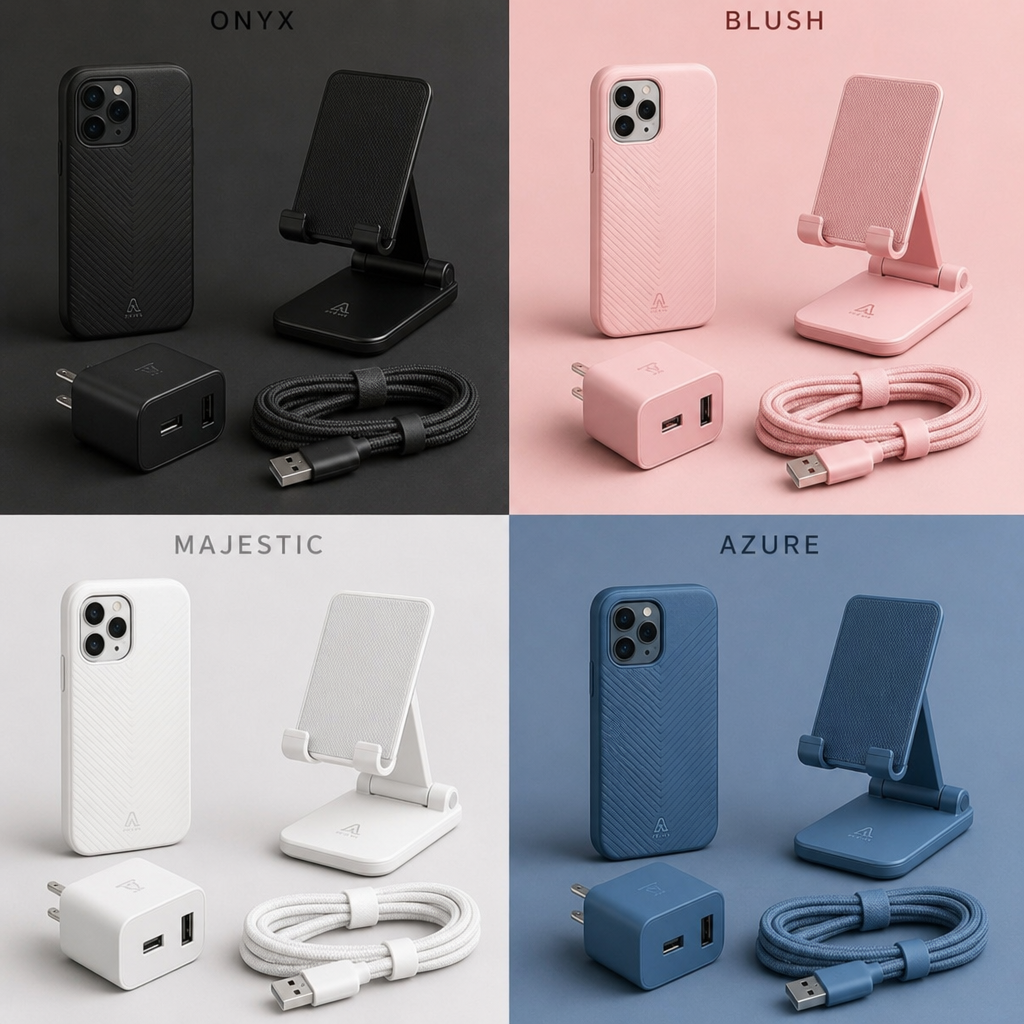
Organize your first collection around a buying situation rather than a broad category. A desk setup might combine a stand, an appropriately specified cable, and a compatible charger. A protection collection might concentrate on cases and screen protectors for selected phone models.
Use three product roles to evaluate potential stock:
Core products: The main reason someone visits, such as a clearly defined case collection.
Complementary products: Items that complete the same purchase, such as a matching screen protector.
Experimental products: A limited selection of phone gadgets used to test an adjacent need.
Set limits on supported models, colors, and styles. For example, choosing five case designs in four colors for six phone models creates 120 variants to manage. Before accepting that complexity, decide how you will track each variant and what evidence justifies stocking it.
For every proposed item, write down the intended buyer, supported devices, supplier, landed cost, selling price, and reason for inclusion. If two items serve essentially the same purpose, consider launching with one until customers demonstrate a need for both.
Avoid describing products as “universal” without documented support for that claim. Make compatibility explicit and keep uncertain items out of bundles until you have verified the combination.
Evaluate suppliers through samples and documentation
Treat supplier selection as a repeatable purchasing process. Request quotes from more than one source, then compare the complete terms rather than the unit price alone. Ask about minimum orders, replenishment times, packaging, substitutions, defects, and returns.
Create a supplier checklist:
Identity and traceability: Obtain business details, invoices, and identifiable product models.
Specifications: Request written dimensions, materials, compatibility, and applicable performance information.
Samples: Examine fit, finish, packaging, labeling, and the functions you intend to advertise.
Consistency: Ask whether repeat orders will use the same components and specifications.
Defect resolution: Agree on reporting deadlines, evidence, replacements, credits, and shipping responsibility.
Documentation: Request relevant compliance and certification records for the exact product being supplied.
Charging products deserve particular scrutiny. USB-IF explains that certified USB logos identify products that have completed its certification process and meet the associated licensing requirements. If a supplier claims USB-IF certification, verify the exact product rather than relying on a logo in a catalog image; do not treat that claim as a substitute for checking other applicable requirements.
Also check relevant recall information before purchasing and while products remain on sale. CPSC maintains recall and product safety information, including information about batteries and chargers.
Keep sample inspection notes and supplier correspondence together. Your inspection is a purchasing check, not a replacement for professional testing or required compliance documentation. If records are missing or contradictory, pause the purchase instead of filling the gap with assumptions.
How much does it cost to start?
Your startup cost depends on the sales model, inventory commitment, location, and operating expenses you choose. Build a quote-based budget rather than relying on a universal startup figure. The SBA recommends identifying startup expenses and separating one-time costs from recurring expenses before opening.
Create a worksheet with these categories:
|
Budget category |
Include in your estimate |
|---|---|
|
Business setup |
Registration, applicable permits, professional advice, and insurance |
|
Product preparation |
Samples, inspections, photography, and packaging design |
|
Opening inventory |
Merchandise, freight, and applicable import-related charges |
|
Selling infrastructure |
Store software, payment equipment, fixtures, or deposits |
|
Launch activity |
Content production, promotional materials, and advertising tests |
|
Operating reserve |
Replenishment, refunds, overhead, and unexpected expenses |
Mark every figure as a confirmed quote or an assumption. Give each assumption a follow-up action so uncertainty does not disappear inside a polished spreadsheet.
Build conservative, expected, and stronger-sales scenarios. In each one, show when money leaves your account and when sales proceeds become available. Include supplier deposits, stock purchases, payment settlement timing, and customer refunds.
Do not commit the entire budget to merchandise. The SBA notes that businesses can appear profitable while working capital remains tied up in inventory. Protect enough cash to operate and replenish products rather than judging affordability by the opening order alone.
If funding is needed, compare financing terms against the conservative scenario. Seek qualified advice before accepting obligations you do not fully understand.
Price for contribution, not just markup
Use a pricing worksheet that distinguishes product markup from the money an order contributes toward overhead. For planning, calculate:
Order contribution = net sales revenue − product cost − other variable order costs.
Include costs that change with the sale, such as payment fees, marketplace charges, packaging, shipping subsidies, and directly attributable advertising. Define your treatment of returns consistently so you do not count the same allowance twice.
For illustration only, suppose an order produces $30 in net sales revenue. If merchandise costs $9 and other variable costs total $11, the order contributes $10 toward fixed expenses and profit. That is a hypothetical planning example, not an expected industry result.
Next, estimate operating break-even:
Break-even orders = fixed operating costs ÷ average contribution per order.
If fixed operating costs were hypothetically $1,000 and average contribution were $10, you would need 100 orders to cover those costs. Account separately for startup spending, financing commitments, owner compensation, and taxes where they are not already included in your model.
Test discounts and bundles with the same worksheet. A bundle should be useful to the customer and still produce an acceptable contribution. If an offer becomes unworkable after a modest return allowance or shipping adjustment, revise it before promoting it.
Set up the business and customer policies
For a US launch, use official state and local resources to confirm the requirements for your business. The SBA identifies business structure, registration, tax identification, licenses, permits, banking, and insurance as key setup areas; the details depend on your circumstances. Consult qualified legal or tax professionals where needed.
Prepare customer-facing policies before taking orders. Explain shipping charges, dispatch estimates, returns, exchanges, warranty handling, and how customers can contact you. Separate your store’s promises from any manufacturer warranty rather than implying they are identical.
Make your delivery language operationally realistic. Under the FTC’s US mail, internet, and telephone order rules, sellers need a reasonable basis for advertised shipment timing. If no shipment period is stated, the rule generally uses 30 days; delays can trigger notification, consent, cancellation, and refund obligations. Check the detailed guidance when designing your procedures.
Assign responsibility for keeping policies accurate. If a supplier changes its lead time or return terms, review the promises you make before accepting further orders. Keep copies of the terms customers saw when purchasing, along with relevant order communications.
Make product pages clear enough to prevent guesswork
Build each product page around the decision a buyer must make. Show the item, explain who it suits, and make compatibility easy to check before checkout. Use your sample inspections and supplier documentation as the basis for descriptions.
For tech accessories, a practical listing template includes:
Exact identity: Product name, model, variant, and selected color.
Compatibility: Supported device models or documented connection requirements.
Specifications: Relevant dimensions, materials, power ratings, or other verified details.
Package contents: Everything included, plus important items that are not included.
Visual evidence: Clear views of connectors, openings, controls, and packaging where useful.
Purchase terms: Dispatch estimate, shipping cost, returns, and support access.
Write benefits that follow from verified features. “Keeps your screen visible on a desk” is more useful than calling an ordinary stand “revolutionary.” Avoid unsupported durability, charging-speed, or protection claims.
Use plain product titles that identify what the item is and what it fits. Create logical collection pages for supported devices and use cases, then connect relevant products with helpful navigation.
Before launch, complete an order on a phone yourself. Check variant selection, payment, confirmation messages, shipping calculations, and the support route. Ask someone unfamiliar with the store to repeat the process without coaching, and record where they hesitate.
Market the buying problem, not just the product
Build your launch content around questions your intended customers actually ask. For a travel collection, demonstrate what fits into a pouch and identify the devices supported by each component. For a desk collection, show the setup process and make clear which items are sold separately.
Prepare a small content library before paying for broad exposure:
A clear introduction to the collection and its intended user.
Product demonstrations based on verified specifications.
Compatibility explanations for the devices you support.
Photos that show scale, connectors, and package contents.
A concise explanation of delivery, returns, and customer support.
For search content, connect each page to a real customer decision. A comparison of the stands you stock should explain their practical differences, not merely repeat product descriptions. A device-specific collection should make supported models unmistakable.
Set a spending limit for advertising experiments and define what you want to learn. Track purchases and contribution alongside clicks. If visitors arrive but do not buy, investigate the offer, compatibility information, delivery cost, and checkout before increasing spend.
For local promotion, consider a small demonstration event or a relevant business partnership. For organizational buyers, prepare a sample kit and a straightforward quotation showing components, compatibility, lead time, and support terms. Keep the initial pitch focused on a specific purchasing need rather than a catalog of unrelated products.
Control inventory and learn from support requests
Give every sellable variant its own stock-keeping unit, or SKU. Use a consistent naming system that identifies the product family and distinguishes model, color, size, or connector differences. Record incoming stock, sales, returns, and damaged units against the correct SKU.
Set reorder decisions using your own sales history and supplier performance. Review how many units sell during replenishment time, then choose a buffer that reflects the uncertainty you can afford. Revisit that buffer as evidence improves rather than treating the first estimate as permanent.
Review these measures weekly:
|
Measure |
Decision it should inform |
|---|---|
|
Contribution by product |
Whether to retain, reprice, or stop an item |
|
Sales by variant |
Which models and colors deserve replenishment |
|
Return and defect reasons |
Whether descriptions, inspections, or suppliers need attention |
|
Inventory age |
When to stop reordering slow-moving stock |
|
Customer acquisition spending |
Whether a promotion supports acceptable economics |
|
Cash available |
What purchasing commitments the business can support |
Tag support requests by cause, such as incorrect model selection, missing instructions, delivery questions, or defects. Use those records to improve listings and purchasing decisions. SBA guidance emphasizes maintaining bookkeeping and examining money coming in and going out as part of managing the business.
Launch in stages and expand with evidence
Use a staged launch to keep decisions manageable. The following sequence is a planning template, not a promise that every business can open within a month:
Define and research. Choose the customer, review competitors, and write the initial offer.
Source and verify. Compare suppliers, inspect samples, and resolve documentation questions.
Prepare the operation. Complete applicable setup, build listings, establish policies, and test checkout.
Run a limited launch. Offer a controlled assortment, fulfill orders, and record customer questions.
Review before expanding. Evaluate contribution, supplier reliability, returns, and cash requirements.
Set a review date and decide in advance what would justify a larger order. Look for acceptable economics and an operation you can repeat, not simply encouraging comments or a busy launch day.
Expand one dimension at a time: more supported devices, another product category, or another sales channel. This makes it easier to understand whether the change helped. If the initial offer struggles, adjust the customer, assortment, or buying experience before assuming that more inventory is the answer.
Start focused and earn the next investment
A useful phone accessories business makes product selection straightforward and keeps its promises after checkout. Begin with a customer you understand, a small assortment you can verify, and numbers that include the real work of selling. Use each launch cycle to improve the offer, then invest further when customer behavior and operating results support the decision.
Frequently Asked Questions About Starting a Phone Accessories Business
What are the initial costs of starting a phone accessories business?
The startup costs can vary widely depending on factors such as your business model, inventory commitment, locati0n, and operational expenses. It's important to create a budget that includes registration, product preparation, opening inventory, selling infrastructure, and launch activities.
How do I choose the right products to sell?
Begin by identifying a specific customer niche and understanding their needs. Conduct market research and competitor analysis to discover what products are in demand. Focus on creating a well-defined assortment that addresses specific buyer situations instead of trying to offer every type of accessory.
What sales model should I choose for my business?
Common sales models include an online store, marketplace shop, physical gadget shop, pop-up events, or B2B sales. Your choice should depend on your available cash, time, and ability to handle orders. Evaluate each model against your strengths and limitations before committing.
How can I find reliable suppliers for my products?
Treat supplier selection as a critical process. Request quotes from multiple sources, compare terms, and ask for samples. Make sure to evaluate identity and traceability, specifications, consistency in quality, and defect resolution processes.
What marketing strategies should I use to promote my business?
Focus on content that addresses the buying problems of your target audience. Create product demonstrations, compatibility explanations, and promotional materials that highlight customer needs. Utilize social media, online advertising, and local events to build awareness and draw in customers.